
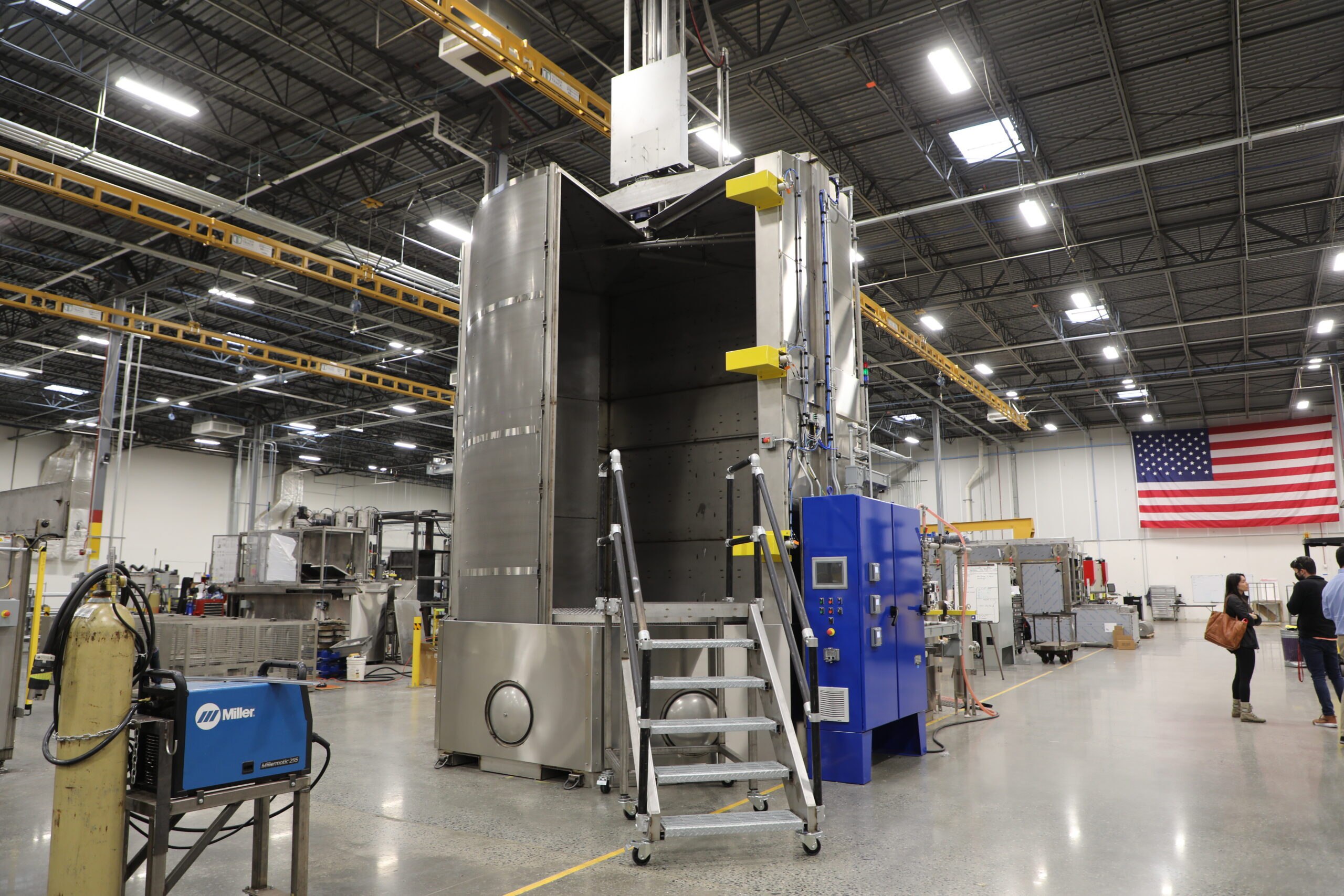
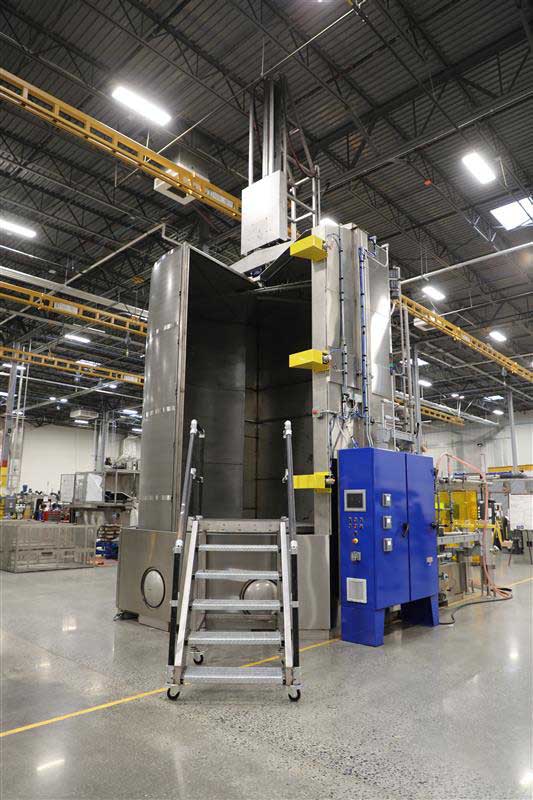
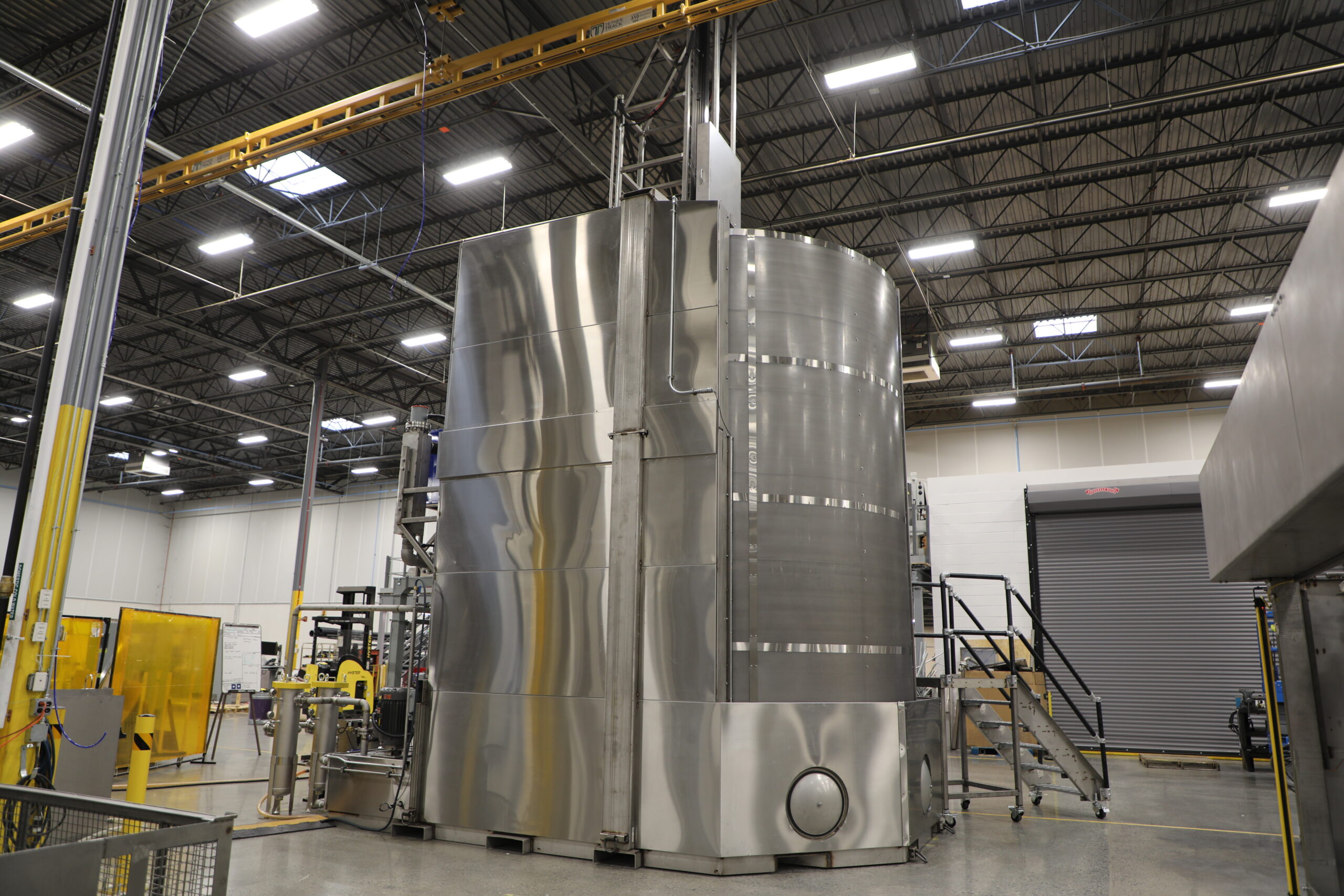
Custom Cabinet Parts Washer

When standard configurations don’t fit your parts, your process, or your production floor, we engineer the solution from the ground up. Better Engineering has been designing and manufacturing custom cabinet parts washers for over four decades. Our engineering team works directly with your process engineers, quality teams, and production managers to design a spray wash cabinet system that fits your exact part geometry, contamination profile, cleanliness specification, footprint constraints, and throughput requirements, not the other way around

Request a Quote online, or call (410) 931-0000 to speak with a member from our sales team.

Request a Quote

Description

Engineered to Your Specification

Every custom cabinet washer project begins with a detailed application review. Our engineers evaluate:

  • Part geometry and loading requirements: Size, weight, shape, fixturing needs, and basket or rack configurations
  • Contamination type and severity: Oil type and load, particulate size and hardness, scale, residues, or biological soils
  • Cleanliness specification: Gravimetric, dynes, visual, functional, or regulated standard (i.e, VDA 19, ISO 16232, customer-defined)
  • Process requirements: Required wash chemistry, temperature range, spray pressure, rinse type, and drying standard
  • Throughput and cycle time: Required parts-per-hour or cycle-per-shift targets
  • Facility constraints: Available floor space, ceiling height, utilities (power, gas, water, drain), and integration points

From this foundation, we design a cabinet parts washer configured precisely around your application.

Custom Configuration Options

ParameterMaximum Capability
Turntable DiameterUp to 180″
Working HeightUp to 130″
Weight CapacityUp to 50,000 lbs.
Pump CapacityUp to 100 HP

Beyond raw scale, custom cabinet washers can be specified with:

  • Powered manifolds: Dynamic spray coverage engineered for complex part geometries that standard fixed manifolds cannot fully address.
  • Customized fixturing: Bespoke fixtures engineered around your specific part profiles to ensure consistent positioning and complete surface exposure.
  • Gas or steam heat: In addition to standard electric heating, matched to your facility’s available utilities and thermal requirements.
  • Pump upgrades up to 100 HP: For applications requiring maximum spray impact on heavily contaminated or large-surface-area parts.
  • Cabinet style options: Top-loading, front-loading hinged door, front-loading roll-in door, or vertical door.
  • Material selection: Mild steel or stainless steel construction based on chemistry and environmental requirements.
  • Any stage combination: Wash, rinse (fresh water, DI, RO, inhibited, phosphate, passivation), blow-off, heated dry,  sequenced to your process.
  • Automation integration: Full robotic load/unload integration and automation cell interfacing.

The Custom Engineering Process

  1. Application Review: We review your parts, contamination profile, cleanliness specification, throughput requirements, and facility constraints.
  2. Parts Testing: Before committing to a configuration, we test your actual parts in our facility. This validates that the proposed wash chemistry, pressure, temperature, and stage sequence achieves your cleanliness specification — eliminating guesswork and de-risking the investment.
  3. Engineering Proposal: Based on confirmed test results, our team develops a detailed system proposal including configuration layout, stage specifications, construction standards, and validated performance expectations.
  4. Design & Fabrication: Your system is designed and built in our manufacturing facility to the approved specification.
  5. Validation & Testing: Every custom cabinet washer is tested against the agreed specification before shipment.

Ready to discuss your application? Contact our engineering team to begin the application review process.

Additional information

Target Applications

Custom cabinet washers are typically specified when:

– Custom cabinet washers are typically specified when:
Standard chamber sizes or turntable capacities don't accommodate the part
– A non-standard number of processing stages is required
– The cleaning chemistry demands specialty material construction
– Regulatory, audit, or cleanliness documentation requirements exceed standard system capability
– The system must integrate directly into an automated production cell
– Unique facility constraints, such as footprint, utilities, or ceiling height, that require a non-standard configuration

Industry

Automotive and EV, Defense, Electronics, Energy, General Industrial Manufacturing, Heavy Equipment, Maintenance, Repair and Operations, Pharmaceutical and Biotech

Description

Engineered to Your Specification

Every custom cabinet washer project begins with a detailed application review. Our engineers evaluate:

  • Part geometry and loading requirements: Size, weight, shape, fixturing needs, and basket or rack configurations
  • Contamination type and severity: Oil type and load, particulate size and hardness, scale, residues, or biological soils
  • Cleanliness specification: Gravimetric, dynes, visual, functional, or regulated standard (i.e, VDA 19, ISO 16232, customer-defined)
  • Process requirements: Required wash chemistry, temperature range, spray pressure, rinse type, and drying standard
  • Throughput and cycle time: Required parts-per-hour or cycle-per-shift targets
  • Facility constraints: Available floor space, ceiling height, utilities (power, gas, water, drain), and integration points

From this foundation, we design a cabinet parts washer configured precisely around your application.

Custom Configuration Options

ParameterMaximum Capability
Turntable DiameterUp to 180″
Working HeightUp to 130″
Weight CapacityUp to 50,000 lbs.
Pump CapacityUp to 100 HP

Beyond raw scale, custom cabinet washers can be specified with:

  • Powered manifolds: Dynamic spray coverage engineered for complex part geometries that standard fixed manifolds cannot fully address.
  • Customized fixturing: Bespoke fixtures engineered around your specific part profiles to ensure consistent positioning and complete surface exposure.
  • Gas or steam heat: In addition to standard electric heating, matched to your facility’s available utilities and thermal requirements.
  • Pump upgrades up to 100 HP: For applications requiring maximum spray impact on heavily contaminated or large-surface-area parts.
  • Cabinet style options: Top-loading, front-loading hinged door, front-loading roll-in door, or vertical door.
  • Material selection: Mild steel or stainless steel construction based on chemistry and environmental requirements.
  • Any stage combination: Wash, rinse (fresh water, DI, RO, inhibited, phosphate, passivation), blow-off, heated dry,  sequenced to your process.
  • Automation integration: Full robotic load/unload integration and automation cell interfacing.

The Custom Engineering Process

  1. Application Review: We review your parts, contamination profile, cleanliness specification, throughput requirements, and facility constraints.
  2. Parts Testing: Before committing to a configuration, we test your actual parts in our facility. This validates that the proposed wash chemistry, pressure, temperature, and stage sequence achieves your cleanliness specification — eliminating guesswork and de-risking the investment.
  3. Engineering Proposal: Based on confirmed test results, our team develops a detailed system proposal including configuration layout, stage specifications, construction standards, and validated performance expectations.
  4. Design & Fabrication: Your system is designed and built in our manufacturing facility to the approved specification.
  5. Validation & Testing: Every custom cabinet washer is tested against the agreed specification before shipment.

Ready to discuss your application? Contact our engineering team to begin the application review process.

Additional information

Target Applications

Custom cabinet washers are typically specified when:

– Custom cabinet washers are typically specified when:
Standard chamber sizes or turntable capacities don't accommodate the part
– A non-standard number of processing stages is required
– The cleaning chemistry demands specialty material construction
– Regulatory, audit, or cleanliness documentation requirements exceed standard system capability
– The system must integrate directly into an automated production cell
– Unique facility constraints, such as footprint, utilities, or ceiling height, that require a non-standard configuration

Industry

Automotive and EV, Defense, Electronics, Energy, General Industrial Manufacturing, Heavy Equipment, Maintenance, Repair and Operations, Pharmaceutical and Biotech

Engineered to Your Specification

Every custom cabinet washer project begins with a detailed application review. Our engineers evaluate:

  • Part geometry and loading requirements: Size, weight, shape, fixturing needs, and basket or rack configurations
  • Contamination type and severity: Oil type and load, particulate size and hardness, scale, residues, or biological soils
  • Cleanliness specification: Gravimetric, dynes, visual, functional, or regulated standard (i.e, VDA 19, ISO 16232, customer-defined)
  • Process requirements: Required wash chemistry, temperature range, spray pressure, rinse type, and drying standard
  • Throughput and cycle time: Required parts-per-hour or cycle-per-shift targets
  • Facility constraints: Available floor space, ceiling height, utilities (power, gas, water, drain), and integration points

From this foundation, we design a cabinet parts washer configured precisely around your application.

Custom Configuration Options

ParameterMaximum Capability
Turntable DiameterUp to 180″
Working HeightUp to 130″
Weight CapacityUp to 50,000 lbs.
Pump CapacityUp to 100 HP

Beyond raw scale, custom cabinet washers can be specified with:

  • Powered manifolds: Dynamic spray coverage engineered for complex part geometries that standard fixed manifolds cannot fully address.
  • Customized fixturing: Bespoke fixtures engineered around your specific part profiles to ensure consistent positioning and complete surface exposure.
  • Gas or steam heat: In addition to standard electric heating, matched to your facility’s available utilities and thermal requirements.
  • Pump upgrades up to 100 HP: For applications requiring maximum spray impact on heavily contaminated or large-surface-area parts.
  • Cabinet style options: Top-loading, front-loading hinged door, front-loading roll-in door, or vertical door.
  • Material selection: Mild steel or stainless steel construction based on chemistry and environmental requirements.
  • Any stage combination: Wash, rinse (fresh water, DI, RO, inhibited, phosphate, passivation), blow-off, heated dry,  sequenced to your process.
  • Automation integration: Full robotic load/unload integration and automation cell interfacing.

The Custom Engineering Process

  1. Application Review: We review your parts, contamination profile, cleanliness specification, throughput requirements, and facility constraints.
  2. Parts Testing: Before committing to a configuration, we test your actual parts in our facility. This validates that the proposed wash chemistry, pressure, temperature, and stage sequence achieves your cleanliness specification — eliminating guesswork and de-risking the investment.
  3. Engineering Proposal: Based on confirmed test results, our team develops a detailed system proposal including configuration layout, stage specifications, construction standards, and validated performance expectations.
  4. Design & Fabrication: Your system is designed and built in our manufacturing facility to the approved specification.
  5. Validation & Testing: Every custom cabinet washer is tested against the agreed specification before shipment.

Ready to discuss your application? Contact our engineering team to begin the application review process.

Additional information

Target Applications

Custom cabinet washers are typically specified when:

– Custom cabinet washers are typically specified when:
Standard chamber sizes or turntable capacities don't accommodate the part
– A non-standard number of processing stages is required
– The cleaning chemistry demands specialty material construction
– Regulatory, audit, or cleanliness documentation requirements exceed standard system capability
– The system must integrate directly into an automated production cell
– Unique facility constraints, such as footprint, utilities, or ceiling height, that require a non-standard configuration

Industry

Automotive and EV, Defense, Electronics, Energy, General Industrial Manufacturing, Heavy Equipment, Maintenance, Repair and Operations, Pharmaceutical and Biotech