
Vacuum Drying Automatic Parts Washer

Drying complex components after automated wash-and-rinse cycles is a significant bottleneck in industrial cleaning. Conventional drying methods, such as high-velocity air blow-offs and thermal evaporation, frequently fail to achieve 100% dryness when processing intricate geometries, including blind holes, tapped recesses, internal channels, and worm trails.

Request a Quote online, or call (410) 931-0000 to speak with a member from our sales team.

Description

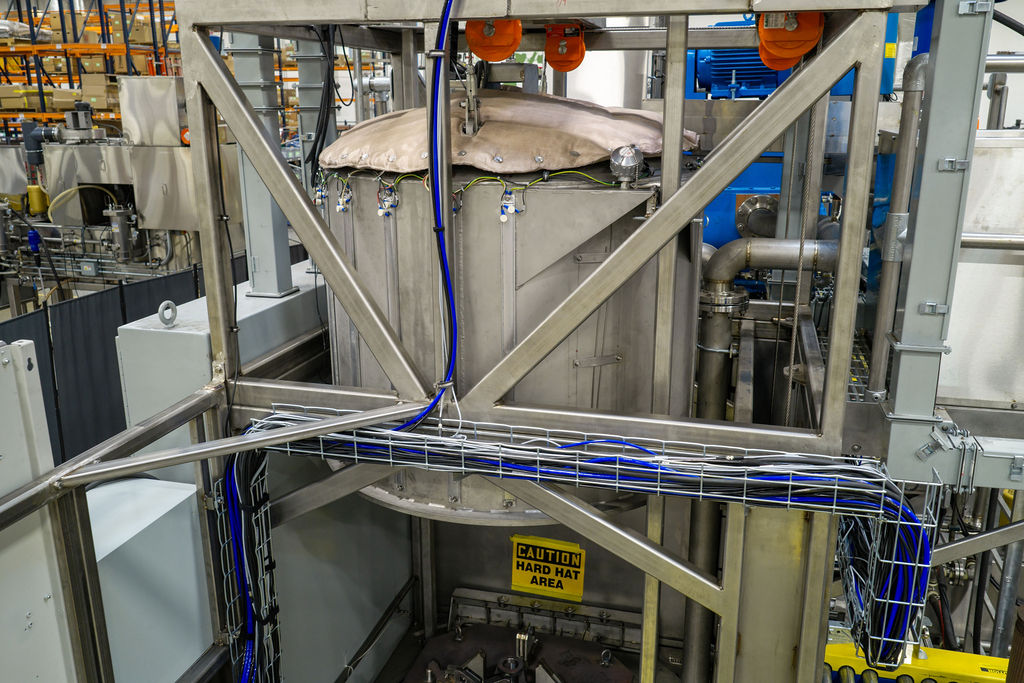
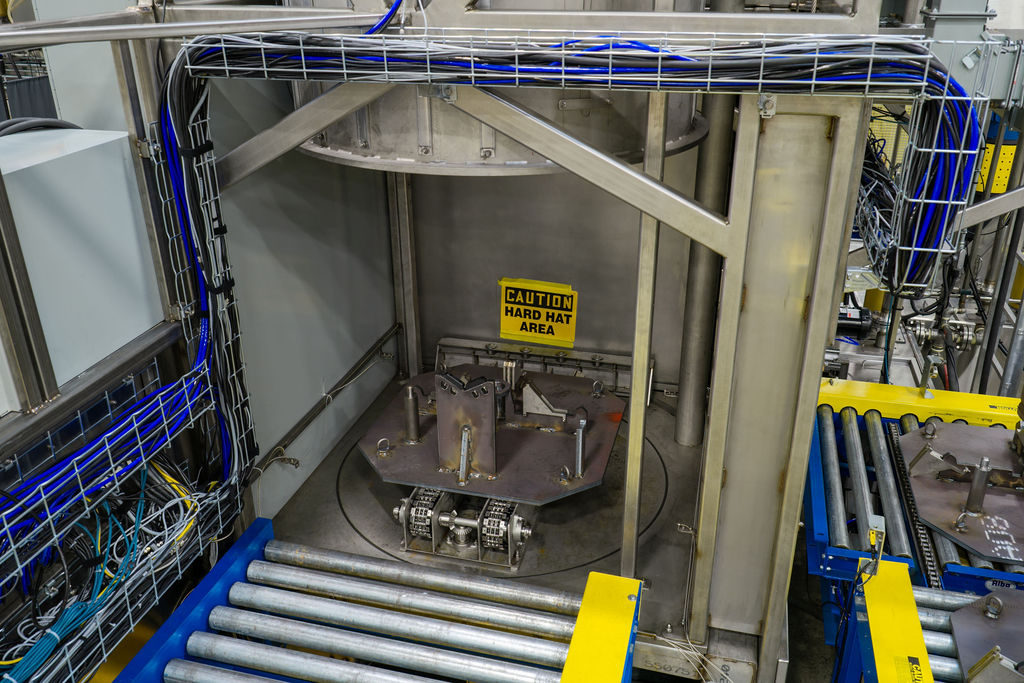
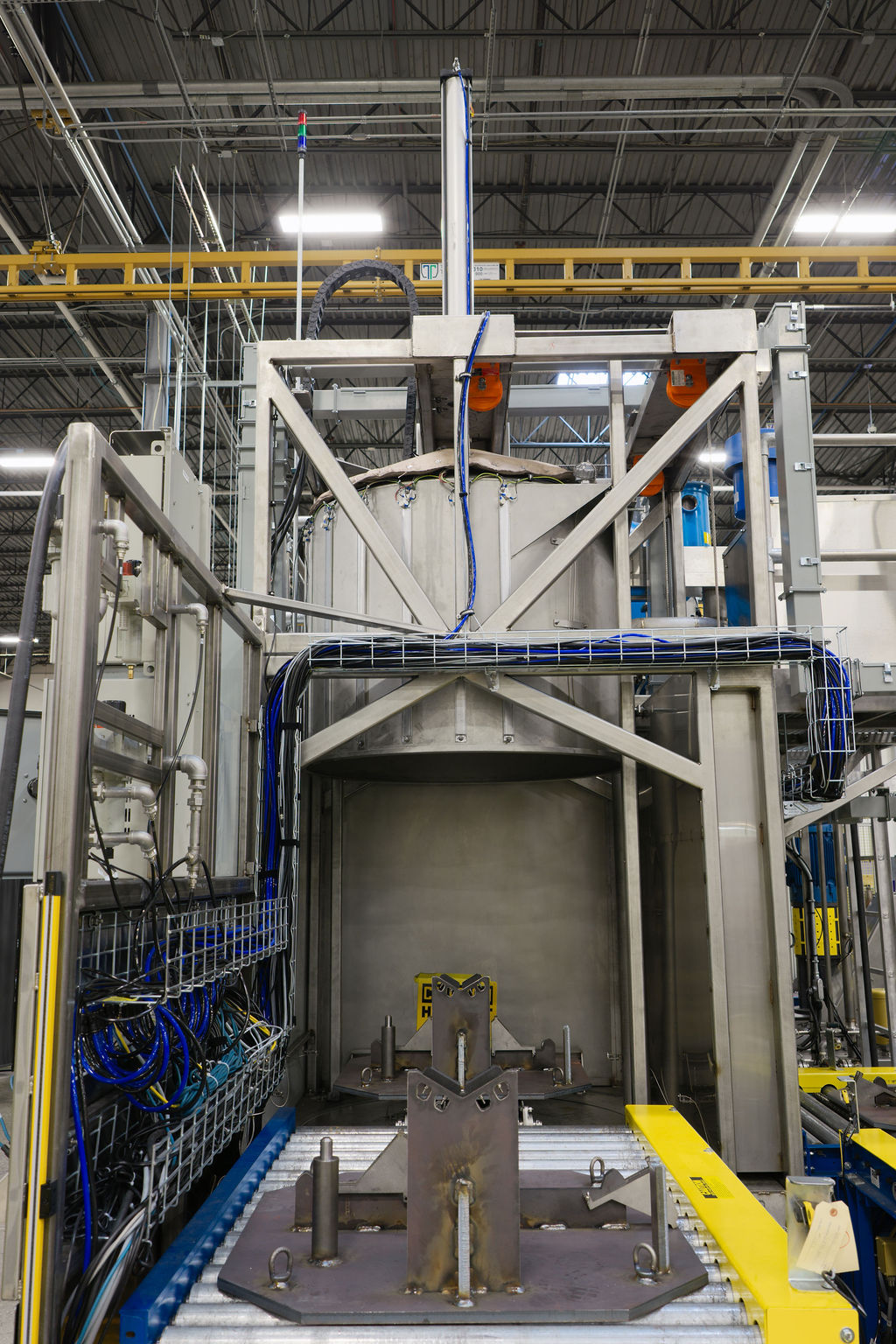
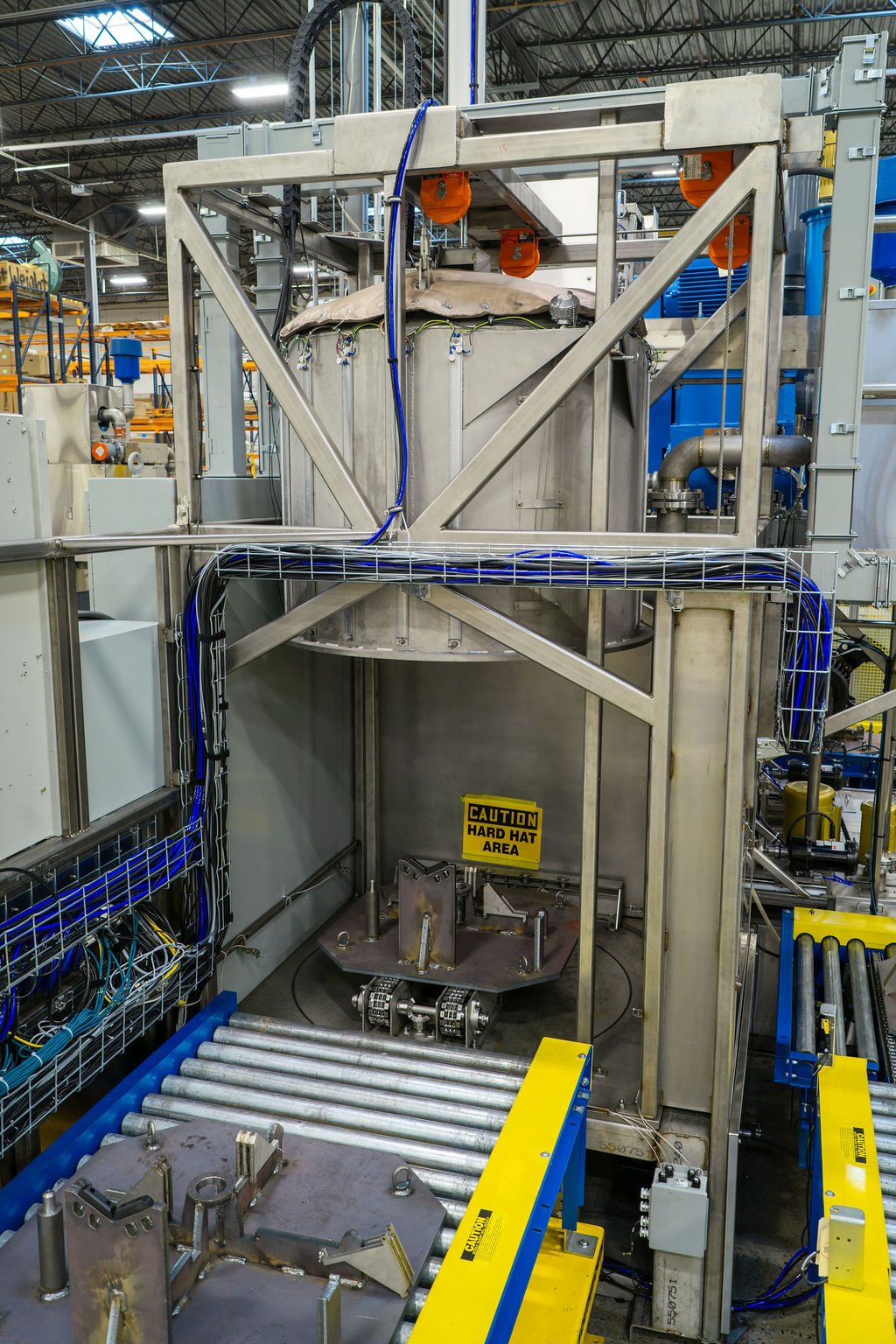
The Vacuum Drying Module is an innovative engineering solution that completely eliminates moisture from these hidden cavities. Engineered as a modular add-on component, this heatless technology can be integrated into a  multi-stage Cyberjet tunnel washer.

The Vacuum Drying Process

The module utilizes precise thermodynamic principles to achieve total dryness without relying on high thermal energy:

  1. Chamber Sealing: Parts exit processing stages and enter a sealed vacuum chamber.
  2. Pressure Depression: A heavy-duty vacuum pump rapidly reduces internal atmospheric pressure toward absolute zero.
  3. Low-Temperature Flash Vaporization: By depressing the chamber pressure, the boiling point of water drops below ambient room temperature.
  4. Instant Evaporation: Trapped moisture inside deep recesses, threads, and internal cavities instantly boils off into vapor and is evacuated from the chamber.

Modular Flexibility & Retrofit Compatibility

Built following Better Engineering’s strict standards for industrial-grade modularity, the vacuum dryer is designed for total application versatility:

  • System Integration: Pairs natively with the Cyberjet tunnel washer platforms, combining seamlessly with traditional air knives to deliver an uncompromised multi-stage Wash-Rinse-Dry workflow.
  • Weld-Free Retrofitting: Features standard flanged connections, allowing facilities to upgrade existing, field-installed washing equipment to meet expanding cleanliness and processing metrics without structural field modifications.

Target Industries & Applications

This advanced drying module is highly recommended for specialized and demanding manufacturing sectors:

  • Aerospace & Defense: Precision instruments, manifold blocks, and complex machined housings with internal cross-drilled channels.
  • Automotive & Powertrain Remanufacturing: Engine blocks, transmission casings, and tapped fastener fields.
  • Rail & Transit – Rail and transit parts often have blind holes, tapped holes, cavities, seams, and complex geometries that trap water after washing. Vacuum drying lowers chamber pressure so residual moisture evaporates from hard-to-reach areas that blow-off or heated air may miss.
  • Medical Device Manufacturing: Intricate medical apparatus components requiring completely dry and spot-free moisture removal.
  • Electronics & Electronics Enclosures: Moisture-critical assemblies where residual water causes immediate oxidation or electrical failure.

Key Engineering Benefits

Integrating a vacuum drying module offers distinct operational advantages over standard forced-air or thermal duct systems:

  • 100% Geometric Dryness: Vaporizes moisture out of small openings, crevices, and internal features where mechanical forced air cannot penetrate.
  • Accelerated Cycle Times: Maximizes throughput by providing rapid, full-dry processing cycles in as little as two (2) minutes.
  • Superior Energy Efficiency: Reduces facility operating costs by consuming 65% less energy than continuous, high-volume compressed-air blow-off systems.
  • Heatless Material Protection: Eliminates thermal stress, making it the ideal solution for temperature-sensitive materials, including plastics, light alloys, and composite assemblies.
  • Supports downstream inspection and testing: Vacuum drying helps remove trapped moisture from holes, cavities, and part features before downstream processes like CMM inspection or leak testing, reducing false readings, water interference, and rework. 
  • Enhanced Operator Safety: Operates as a cool process, eliminating the workplace hazards associated with technicians handling scorching, thermally dried metal parts.

Additional information

Industry

3D Parts, Aerospace, Automotive and EV, Energy, General Industrial Manufacturing, Maintenance, Repair and Operations, Medical Devices

Description

The Vacuum Drying Module is an innovative engineering solution that completely eliminates moisture from these hidden cavities. Engineered as a modular add-on component, this heatless technology can be integrated into a  multi-stage Cyberjet tunnel washer.

The Vacuum Drying Process

The module utilizes precise thermodynamic principles to achieve total dryness without relying on high thermal energy:

  1. Chamber Sealing: Parts exit processing stages and enter a sealed vacuum chamber.
  2. Pressure Depression: A heavy-duty vacuum pump rapidly reduces internal atmospheric pressure toward absolute zero.
  3. Low-Temperature Flash Vaporization: By depressing the chamber pressure, the boiling point of water drops below ambient room temperature.
  4. Instant Evaporation: Trapped moisture inside deep recesses, threads, and internal cavities instantly boils off into vapor and is evacuated from the chamber.

Modular Flexibility & Retrofit Compatibility

Built following Better Engineering’s strict standards for industrial-grade modularity, the vacuum dryer is designed for total application versatility:

  • System Integration: Pairs natively with the Cyberjet tunnel washer platforms, combining seamlessly with traditional air knives to deliver an uncompromised multi-stage Wash-Rinse-Dry workflow.
  • Weld-Free Retrofitting: Features standard flanged connections, allowing facilities to upgrade existing, field-installed washing equipment to meet expanding cleanliness and processing metrics without structural field modifications.

Target Industries & Applications

This advanced drying module is highly recommended for specialized and demanding manufacturing sectors:

  • Aerospace & Defense: Precision instruments, manifold blocks, and complex machined housings with internal cross-drilled channels.
  • Automotive & Powertrain Remanufacturing: Engine blocks, transmission casings, and tapped fastener fields.
  • Rail & Transit – Rail and transit parts often have blind holes, tapped holes, cavities, seams, and complex geometries that trap water after washing. Vacuum drying lowers chamber pressure so residual moisture evaporates from hard-to-reach areas that blow-off or heated air may miss.
  • Medical Device Manufacturing: Intricate medical apparatus components requiring completely dry and spot-free moisture removal.
  • Electronics & Electronics Enclosures: Moisture-critical assemblies where residual water causes immediate oxidation or electrical failure.

Key Engineering Benefits

Integrating a vacuum drying module offers distinct operational advantages over standard forced-air or thermal duct systems:

  • 100% Geometric Dryness: Vaporizes moisture out of small openings, crevices, and internal features where mechanical forced air cannot penetrate.
  • Accelerated Cycle Times: Maximizes throughput by providing rapid, full-dry processing cycles in as little as two (2) minutes.
  • Superior Energy Efficiency: Reduces facility operating costs by consuming 65% less energy than continuous, high-volume compressed-air blow-off systems.
  • Heatless Material Protection: Eliminates thermal stress, making it the ideal solution for temperature-sensitive materials, including plastics, light alloys, and composite assemblies.
  • Supports downstream inspection and testing: Vacuum drying helps remove trapped moisture from holes, cavities, and part features before downstream processes like CMM inspection or leak testing, reducing false readings, water interference, and rework. 
  • Enhanced Operator Safety: Operates as a cool process, eliminating the workplace hazards associated with technicians handling scorching, thermally dried metal parts.

Additional information

Industry

3D Parts, Aerospace, Automotive and EV, Energy, General Industrial Manufacturing, Maintenance, Repair and Operations, Medical Devices

The Vacuum Drying Module is an innovative engineering solution that completely eliminates moisture from these hidden cavities. Engineered as a modular add-on component, this heatless technology can be integrated into a  multi-stage Cyberjet tunnel washer.

The Vacuum Drying Process

The module utilizes precise thermodynamic principles to achieve total dryness without relying on high thermal energy:

  1. Chamber Sealing: Parts exit processing stages and enter a sealed vacuum chamber.
  2. Pressure Depression: A heavy-duty vacuum pump rapidly reduces internal atmospheric pressure toward absolute zero.
  3. Low-Temperature Flash Vaporization: By depressing the chamber pressure, the boiling point of water drops below ambient room temperature.
  4. Instant Evaporation: Trapped moisture inside deep recesses, threads, and internal cavities instantly boils off into vapor and is evacuated from the chamber.

Modular Flexibility & Retrofit Compatibility

Built following Better Engineering’s strict standards for industrial-grade modularity, the vacuum dryer is designed for total application versatility:

  • System Integration: Pairs natively with the Cyberjet tunnel washer platforms, combining seamlessly with traditional air knives to deliver an uncompromised multi-stage Wash-Rinse-Dry workflow.
  • Weld-Free Retrofitting: Features standard flanged connections, allowing facilities to upgrade existing, field-installed washing equipment to meet expanding cleanliness and processing metrics without structural field modifications.

Target Industries & Applications

This advanced drying module is highly recommended for specialized and demanding manufacturing sectors:

  • Aerospace & Defense: Precision instruments, manifold blocks, and complex machined housings with internal cross-drilled channels.
  • Automotive & Powertrain Remanufacturing: Engine blocks, transmission casings, and tapped fastener fields.
  • Rail & Transit – Rail and transit parts often have blind holes, tapped holes, cavities, seams, and complex geometries that trap water after washing. Vacuum drying lowers chamber pressure so residual moisture evaporates from hard-to-reach areas that blow-off or heated air may miss.
  • Medical Device Manufacturing: Intricate medical apparatus components requiring completely dry and spot-free moisture removal.
  • Electronics & Electronics Enclosures: Moisture-critical assemblies where residual water causes immediate oxidation or electrical failure.

Key Engineering Benefits

Integrating a vacuum drying module offers distinct operational advantages over standard forced-air or thermal duct systems:

  • 100% Geometric Dryness: Vaporizes moisture out of small openings, crevices, and internal features where mechanical forced air cannot penetrate.
  • Accelerated Cycle Times: Maximizes throughput by providing rapid, full-dry processing cycles in as little as two (2) minutes.
  • Superior Energy Efficiency: Reduces facility operating costs by consuming 65% less energy than continuous, high-volume compressed-air blow-off systems.
  • Heatless Material Protection: Eliminates thermal stress, making it the ideal solution for temperature-sensitive materials, including plastics, light alloys, and composite assemblies.
  • Supports downstream inspection and testing: Vacuum drying helps remove trapped moisture from holes, cavities, and part features before downstream processes like CMM inspection or leak testing, reducing false readings, water interference, and rework. 
  • Enhanced Operator Safety: Operates as a cool process, eliminating the workplace hazards associated with technicians handling scorching, thermally dried metal parts.

Additional information

Industry

3D Parts, Aerospace, Automotive and EV, Energy, General Industrial Manufacturing, Maintenance, Repair and Operations, Medical Devices