Sanitizing Rack Washer

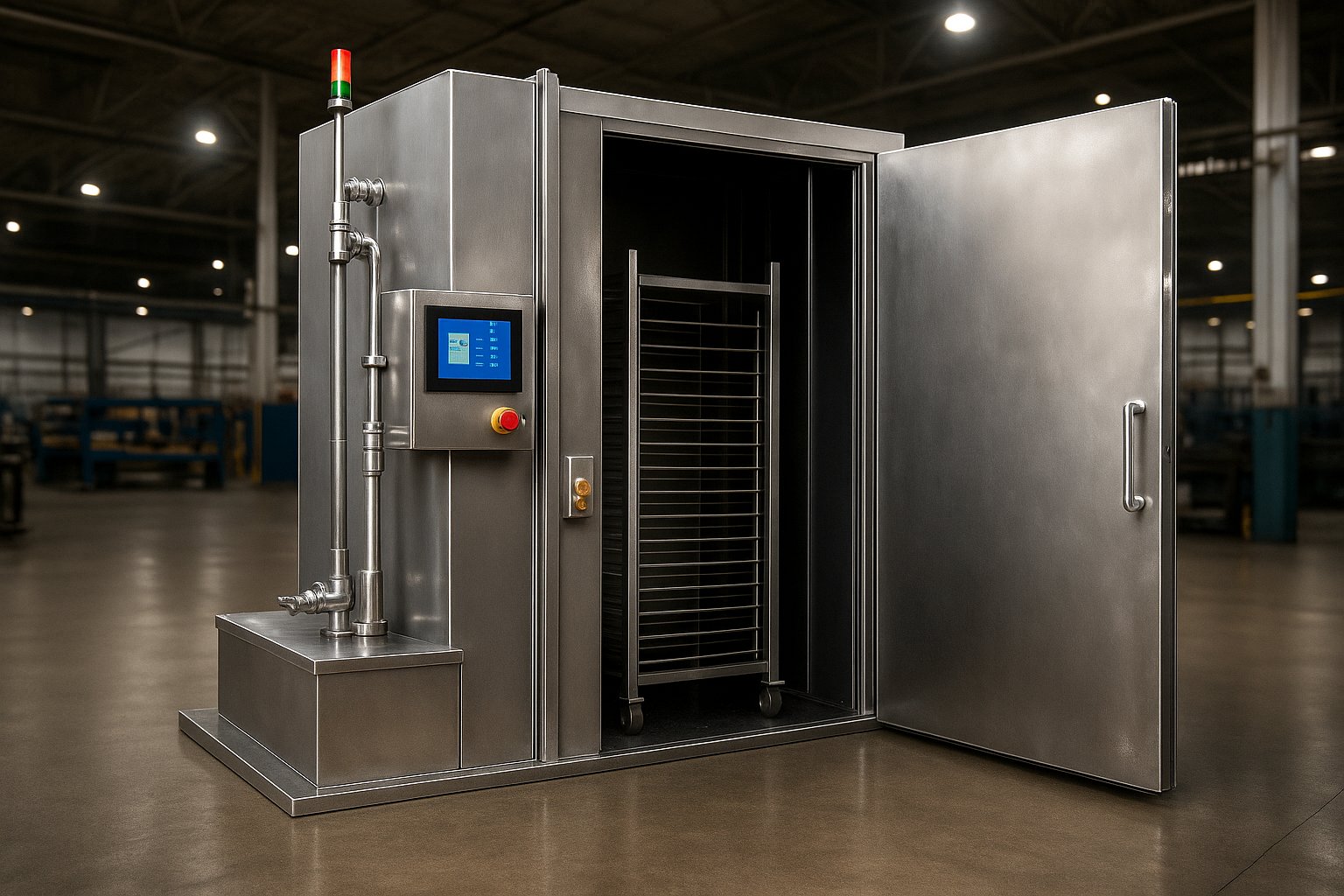
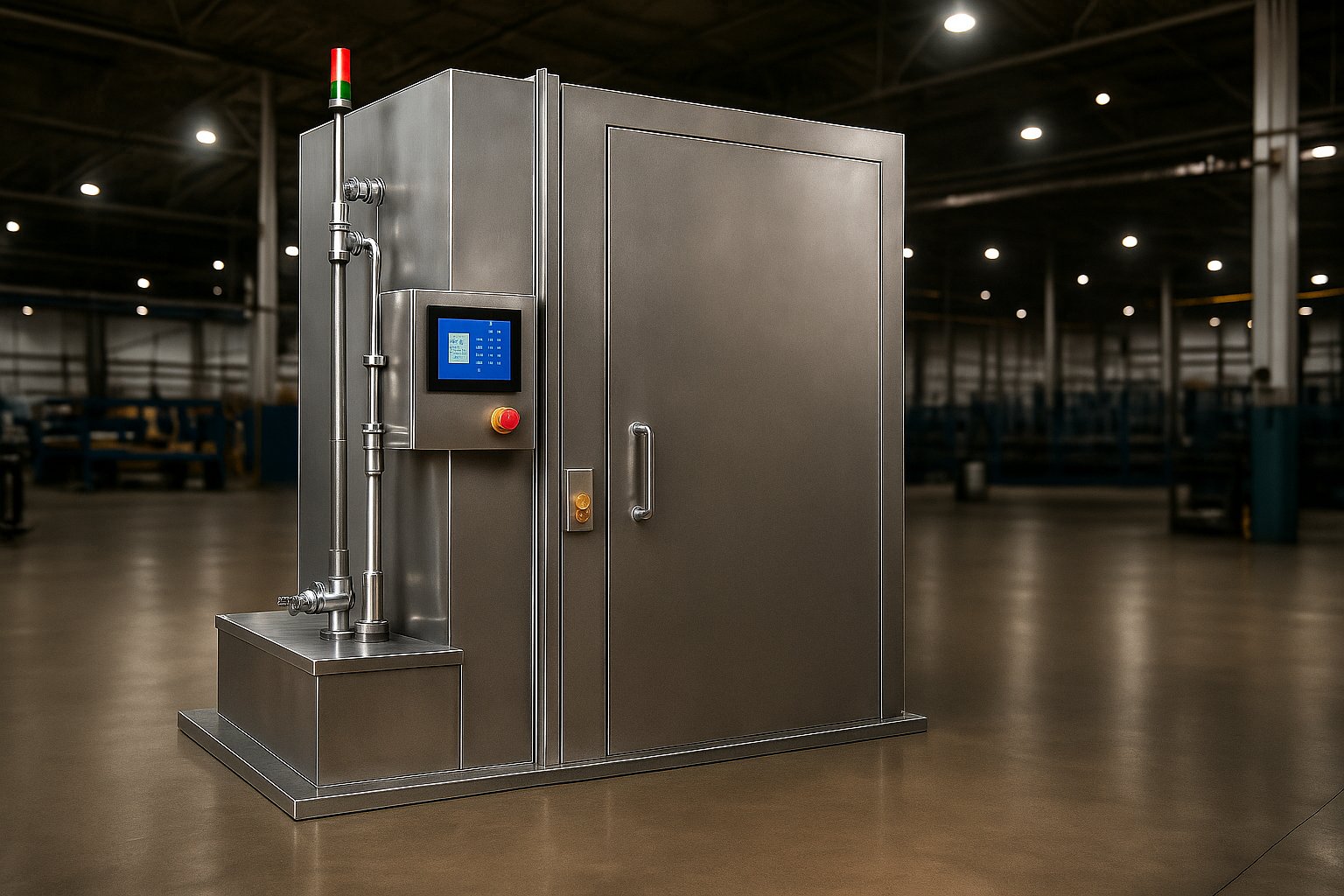
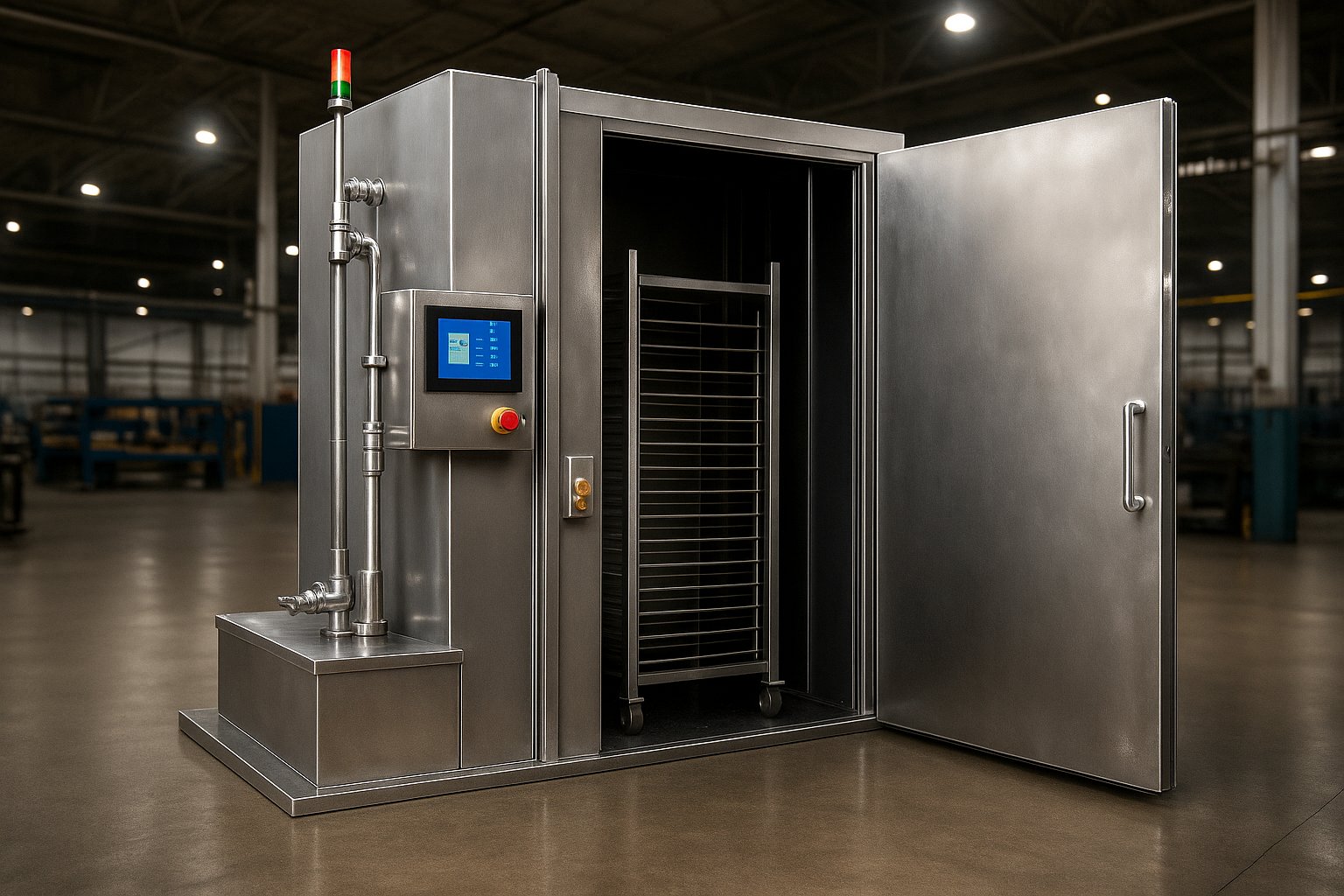
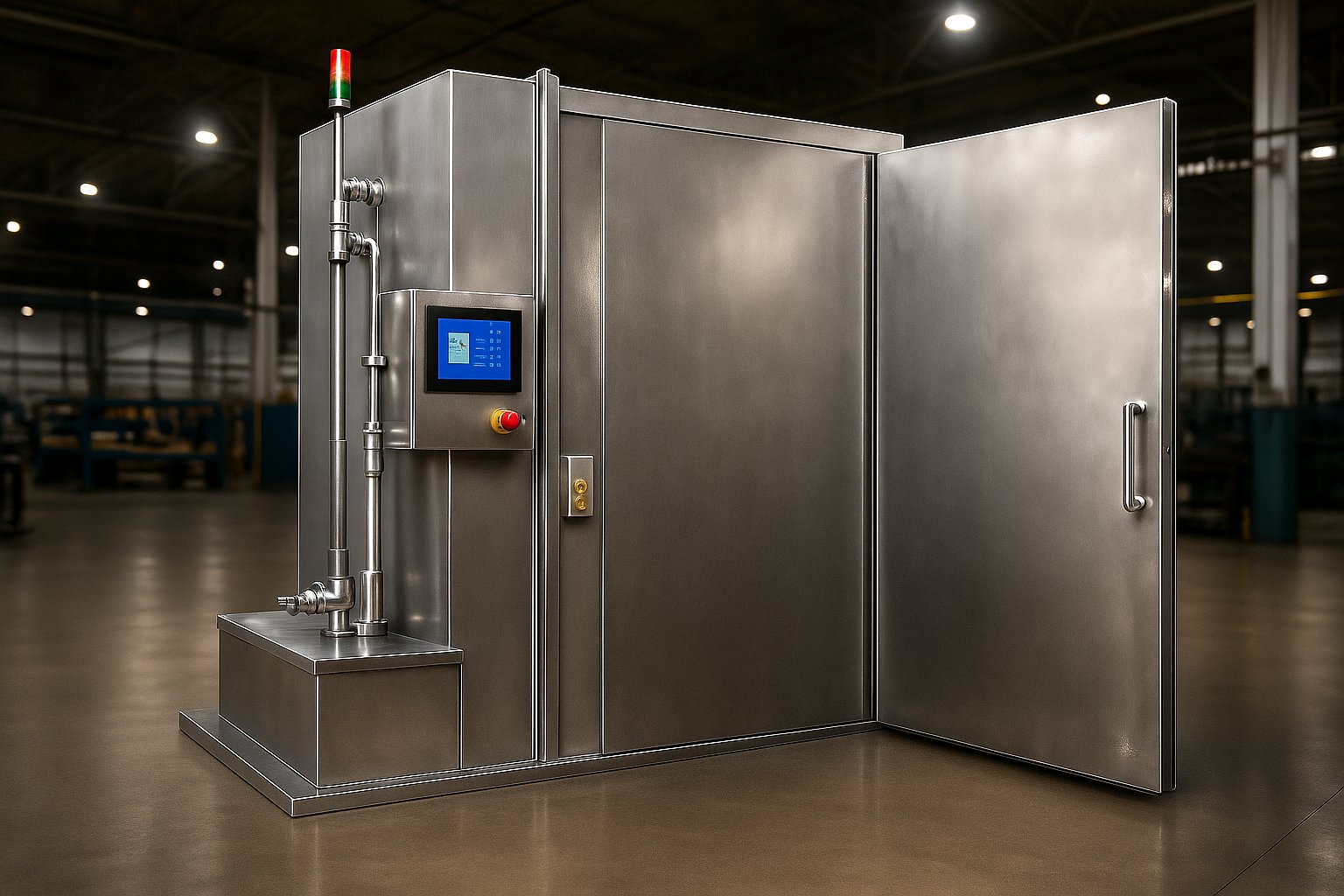
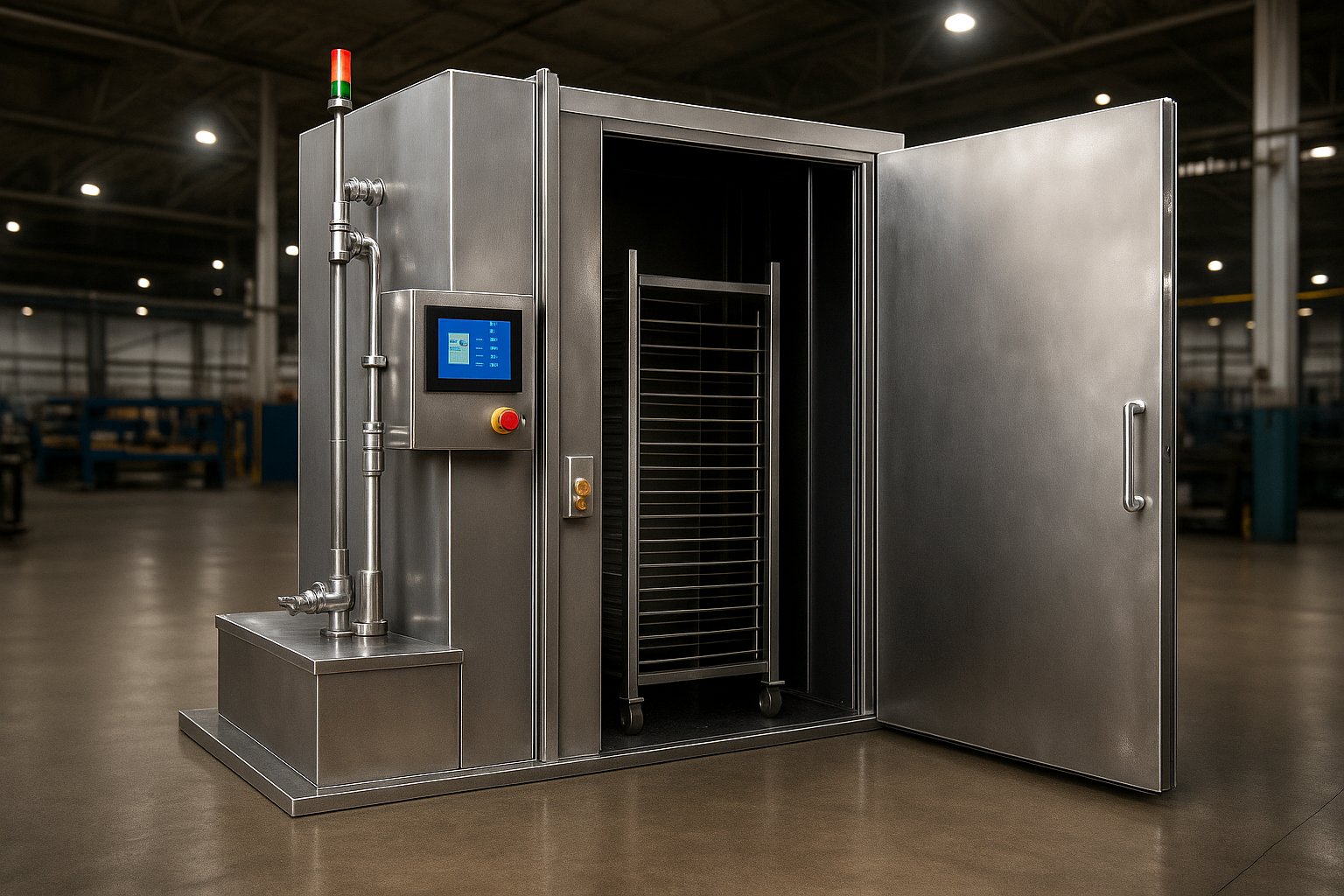
The Better Engineering CR-1500-SAN is a hygienic rack washer designed for food processing, pharmaceutical manufacturing, and other sanitation-critical production environments. This automated rack washing system cleans and sanitizes rolling racks, bakery racks, smoke racks, process carts, custom wash racks, totes, bins, dunnage, and reusable production equipment through repeatable wash, rinse/sanitize, and drying cycles.

Request a Quote online, or call (410) 931-0000 to speak with a member from our sales team.

Description

Built around hygienic design principles, the CR-1500-SAN features stainless steel construction, a self-cleaning working tank, optional thermal or chemical sanitization, PLC/HMI controls, and configurable process monitoring. The working tank can be configured to automatically empty between cycles to help reduce cross-contamination risk, or recirculate solution when water, energy, and detergent conservation are desired.

Each roll-in rack washer can be custom-engineered around your rack dimensions, sanitation requirements, allergen control needs, soil load, throughput goals, and facility layout.

Hygienic Rack Washer for Sanitary Production Environments

The CR-1500-SAN hygienic rack washer is designed to automate the cleaning and sanitization of large reusable production equipment that can be difficult, time-consuming, or inconsistent to clean manually. It is ideal for rolling racks, bakery racks, smoke racks, process carts, custom wash racks, totes, bins, dunnage, and other reusable equipment used in sanitary production environments.

Using high-volume spray impingement, controlled detergent injection, fresh-water rinsing, chemical or thermal sanitization, and optional heated drying, the system delivers repeatable cleaning performance while helping reduce manual labor, operator variability, and cross-contamination risk.

The CR-1500-SAN can also be configured with a working tank that either recirculates solution for improved water, energy, and detergent efficiency or automatically empties between cycles to support applications with stricter cross-contamination, allergen, or sanitation requirements.

The CR-1500-SAN can be equipped with walking spray manifolds that travel along the load during the wash and rinse cycles. Unlike fixed or spinning spray designs, walking manifolds maintain controlled nozzle positioning and spray distance to improve spray impingement across racks, carts, totes, bins, dunnage, and complex load geometries.

This design also improves reliability compared with spinning manifolds, which can lose rotation or stop working properly when nozzles become clogged. Walking manifolds provide a more controlled spray pattern, helping deliver consistent coverage, better soil removal, and repeatable cleaning performance, especially for tall, dense, or irregularly shaped loads where proper spray contact is critical.

Powered Elevator Loading System

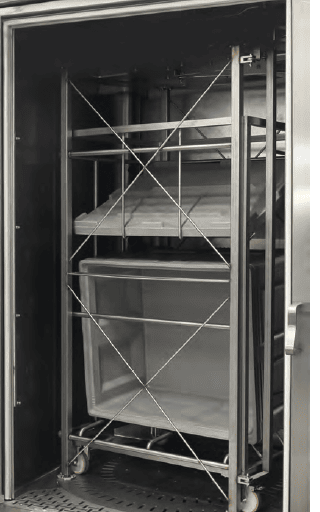
Unlike traditional ramp-loaded systems or active rack designs, Better Engineering’s rack washer uses a powered elevator to raise and lower customer racks during loading and unloading. This eliminates the need to manually push heavy racks up a ramp while improving operator ergonomics and day-to-day usability.

Just as important, the powered elevator allows the washer to clean the entire rack, including the lower frame, wheel area, and casters. In active rack systems, the bottom of the rack and wheels can be difficult to reach, allowing contaminants to remain on the equipment and track throughout the facility after washing. Better Engineering’s elevator-based approach helps reduce that risk by providing more complete wash exposure without requiring customers to purchase, maintain, or change over custom removable racks.

The result is a safer, cleaner, and more practical rack washing process that supports sanitation, contamination control, and efficient production flow.

BE’s Wash, Sanitize & Dry Performance

Each Better Engineering rack washing system can be configured around your specific sanitation process, soil load, throughput requirements, and validation needs.

  • Knock-Down Stage: For applications with heavy soils, loose debris, food residue, or production buildup, a knock-down stage can be incorporated at the beginning of the cycle. This initial high-volume spray step helps remove gross contamination before the main wash stage, improving cleaning efficiency and reducing the burden on downstream wash and rinse processes.
  • Wash Stage: A stainless steel working tank automatically fills, detergent is injected, and high-volume spray manifolds clean all exposed rack surfaces. Wash solution may be discharged after each cycle to help reduce cross-contamination risk or routed to an optional holding tank for reuse when water, energy, and detergent conservation are desired.
  • Fresh Rinse & Sanitization Stage: One or more rinse stages can be incorporated into the cleaning sequence. Systems can be configured for fresh-water rinsing, chemical sanitization, thermal sanitization, and elevated rinse temperatures up to 180°F.
  • Drying Stage: Optional heated drying systems use high-volume airflow and elevated air temperatures to remove residual moisture and prepare racks, carts, and production equipment for immediate return to production.

Designed for Sanitation & Validation

The CR-1500-SAN is designed for facilities operating under strict sanitation, quality, and validation requirements. By combining hygienic construction, controlled wash cycles, chemical or thermal sanitization, and optional process documentation, the system helps support repeatable cleaning performance and reduce manual cleaning variability. Applications may include support for:

  • HACCP programs
  • FSMA compliance initiatives
  • GMP environments
  • FDA-regulated manufacturing
  • ATP verification programs
  • EB testing programs
  • TOC testing programs
  • Riboflavin coverage testing
  • IQ/OQ validation protocols

Systems can be configured to monitor and record critical cleaning and sanitization parameters, including:

  • Water temperature
  • Cycle duration
  • Sanitizer concentration
  • Rinse performance
  • Drying conditions
  • Chemical usage
  • Alarm history
  • Batch or cycle records

For advanced sanitation documentation and process verification, CR-1500-SAN rack washers can be equipped with PLC/HMI controls, data recording, and MES/SCADA integration to capture critical wash and sanitization parameters. These capabilities help support traceability, sanitation verification, validation efforts, and quality assurance programs.

Sanitary Construction & Smart Controls

The CR-1500-SAN is built for demanding washdown environments with hygienic construction, service-friendly access, and intelligent controls that simplify operation, cleaning, maintenance, and inspection. Each system is engineered to support repeatable rack washing and sanitizing performance in food processing, pharmaceutical, biomedical, and other sanitation-critical production environments.

Additional information

Standard Features

– Stainless steel construction
– 304 stainless steel wetted components
– Optional 316 stainless steel construction
– PLC/HMI operation
– Automatic fill and drain controls
– Self-cleaning working tank
– Powered elevator loading system
– Recirculated or automatic drain-between-cycle operation
– Walking manifold spray coverage

Available Control and Monitoring Upgrades

– Allen-Bradley CompactLogix PLC
– Ethernet communications
– Remote support capability
– Conductivity monitoring
– Automated chemical dosing
– Pressure switches
– Flow switches
– Temperature monitoring
– Alarm monitoring
– Data acquisition systems
– MES/SCADA integration

Together, these features help improve cleaning consistency, support sanitation documentation, reduce maintenance demands, and provide operators with greater visibility into each wash, rinse, sanitize, and dry cycle.

Primary Wash Stage

The primary wash stage is designed to deliver thorough, repeatable cleaning coverage across racks, carts, totes, bins, dunnage, and other reusable production equipment. This stage utilizes: automatic fill controls, automatic drain controls, detergent injection, and moving spray manifolds. Together, these features help improve spray coverage, maintain process consistency, and support reliable soil removal throughout each wash cycle.

Fresh Rinse & Sanitizing Stage

Fresh-water rinsing is delivered through controlled spray coverage to remove detergent carryover and remaining soils after the primary wash stage. Typical fresh rinse parameters include approximately 3 to 5 GPM and 20 PSI. Available options include 180°F sanitizing rinse, booster heating systems, and chemical sanitization. This stage can be configured to support thermal sanitization, chemical sanitization, or process-specific rinse requirements based on your sanitation program and facility utilities.

DRY-40 Heated Dry Stage

The optional DRY-40 heated drying system helps accelerate moisture removal so racks, carts, and production equipment can return to service faster. This drying stage utilizes heated air circulation and high-volume airflow. By reducing residual moisture, the DRY-40 helps prepare cleaned equipment for immediate reuse, storage, or return to production.

Industry

Bakery Operations, Food and Beverage, HACCP-Controlled Operations, Meat and Poultry, Pharmaceutical and Biotech, Sanitary Production Environments, Seafood Processing

Description

Built around hygienic design principles, the CR-1500-SAN features stainless steel construction, a self-cleaning working tank, optional thermal or chemical sanitization, PLC/HMI controls, and configurable process monitoring. The working tank can be configured to automatically empty between cycles to help reduce cross-contamination risk, or recirculate solution when water, energy, and detergent conservation are desired.

Each roll-in rack washer can be custom-engineered around your rack dimensions, sanitation requirements, allergen control needs, soil load, throughput goals, and facility layout.

Hygienic Rack Washer for Sanitary Production Environments

The CR-1500-SAN hygienic rack washer is designed to automate the cleaning and sanitization of large reusable production equipment that can be difficult, time-consuming, or inconsistent to clean manually. It is ideal for rolling racks, bakery racks, smoke racks, process carts, custom wash racks, totes, bins, dunnage, and other reusable equipment used in sanitary production environments.

Using high-volume spray impingement, controlled detergent injection, fresh-water rinsing, chemical or thermal sanitization, and optional heated drying, the system delivers repeatable cleaning performance while helping reduce manual labor, operator variability, and cross-contamination risk.

The CR-1500-SAN can also be configured with a working tank that either recirculates solution for improved water, energy, and detergent efficiency or automatically empties between cycles to support applications with stricter cross-contamination, allergen, or sanitation requirements.

The CR-1500-SAN can be equipped with walking spray manifolds that travel along the load during the wash and rinse cycles. Unlike fixed or spinning spray designs, walking manifolds maintain controlled nozzle positioning and spray distance to improve spray impingement across racks, carts, totes, bins, dunnage, and complex load geometries.

This design also improves reliability compared with spinning manifolds, which can lose rotation or stop working properly when nozzles become clogged. Walking manifolds provide a more controlled spray pattern, helping deliver consistent coverage, better soil removal, and repeatable cleaning performance, especially for tall, dense, or irregularly shaped loads where proper spray contact is critical.

Powered Elevator Loading System

Unlike traditional ramp-loaded systems or active rack designs, Better Engineering’s rack washer uses a powered elevator to raise and lower customer racks during loading and unloading. This eliminates the need to manually push heavy racks up a ramp while improving operator ergonomics and day-to-day usability.

Just as important, the powered elevator allows the washer to clean the entire rack, including the lower frame, wheel area, and casters. In active rack systems, the bottom of the rack and wheels can be difficult to reach, allowing contaminants to remain on the equipment and track throughout the facility after washing. Better Engineering’s elevator-based approach helps reduce that risk by providing more complete wash exposure without requiring customers to purchase, maintain, or change over custom removable racks.

The result is a safer, cleaner, and more practical rack washing process that supports sanitation, contamination control, and efficient production flow.

BE’s Wash, Sanitize & Dry Performance

Each Better Engineering rack washing system can be configured around your specific sanitation process, soil load, throughput requirements, and validation needs.

  • Knock-Down Stage: For applications with heavy soils, loose debris, food residue, or production buildup, a knock-down stage can be incorporated at the beginning of the cycle. This initial high-volume spray step helps remove gross contamination before the main wash stage, improving cleaning efficiency and reducing the burden on downstream wash and rinse processes.
  • Wash Stage: A stainless steel working tank automatically fills, detergent is injected, and high-volume spray manifolds clean all exposed rack surfaces. Wash solution may be discharged after each cycle to help reduce cross-contamination risk or routed to an optional holding tank for reuse when water, energy, and detergent conservation are desired.
  • Fresh Rinse & Sanitization Stage: One or more rinse stages can be incorporated into the cleaning sequence. Systems can be configured for fresh-water rinsing, chemical sanitization, thermal sanitization, and elevated rinse temperatures up to 180°F.
  • Drying Stage: Optional heated drying systems use high-volume airflow and elevated air temperatures to remove residual moisture and prepare racks, carts, and production equipment for immediate return to production.

Designed for Sanitation & Validation

The CR-1500-SAN is designed for facilities operating under strict sanitation, quality, and validation requirements. By combining hygienic construction, controlled wash cycles, chemical or thermal sanitization, and optional process documentation, the system helps support repeatable cleaning performance and reduce manual cleaning variability. Applications may include support for:

  • HACCP programs
  • FSMA compliance initiatives
  • GMP environments
  • FDA-regulated manufacturing
  • ATP verification programs
  • EB testing programs
  • TOC testing programs
  • Riboflavin coverage testing
  • IQ/OQ validation protocols

Systems can be configured to monitor and record critical cleaning and sanitization parameters, including:

  • Water temperature
  • Cycle duration
  • Sanitizer concentration
  • Rinse performance
  • Drying conditions
  • Chemical usage
  • Alarm history
  • Batch or cycle records

For advanced sanitation documentation and process verification, CR-1500-SAN rack washers can be equipped with PLC/HMI controls, data recording, and MES/SCADA integration to capture critical wash and sanitization parameters. These capabilities help support traceability, sanitation verification, validation efforts, and quality assurance programs.

Sanitary Construction & Smart Controls

The CR-1500-SAN is built for demanding washdown environments with hygienic construction, service-friendly access, and intelligent controls that simplify operation, cleaning, maintenance, and inspection. Each system is engineered to support repeatable rack washing and sanitizing performance in food processing, pharmaceutical, biomedical, and other sanitation-critical production environments.

Additional information

Standard Features

– Stainless steel construction
– 304 stainless steel wetted components
– Optional 316 stainless steel construction
– PLC/HMI operation
– Automatic fill and drain controls
– Self-cleaning working tank
– Powered elevator loading system
– Recirculated or automatic drain-between-cycle operation
– Walking manifold spray coverage

Available Control and Monitoring Upgrades

– Allen-Bradley CompactLogix PLC
– Ethernet communications
– Remote support capability
– Conductivity monitoring
– Automated chemical dosing
– Pressure switches
– Flow switches
– Temperature monitoring
– Alarm monitoring
– Data acquisition systems
– MES/SCADA integration

Together, these features help improve cleaning consistency, support sanitation documentation, reduce maintenance demands, and provide operators with greater visibility into each wash, rinse, sanitize, and dry cycle.

Primary Wash Stage

The primary wash stage is designed to deliver thorough, repeatable cleaning coverage across racks, carts, totes, bins, dunnage, and other reusable production equipment. This stage utilizes: automatic fill controls, automatic drain controls, detergent injection, and moving spray manifolds. Together, these features help improve spray coverage, maintain process consistency, and support reliable soil removal throughout each wash cycle.

Fresh Rinse & Sanitizing Stage

Fresh-water rinsing is delivered through controlled spray coverage to remove detergent carryover and remaining soils after the primary wash stage. Typical fresh rinse parameters include approximately 3 to 5 GPM and 20 PSI. Available options include 180°F sanitizing rinse, booster heating systems, and chemical sanitization. This stage can be configured to support thermal sanitization, chemical sanitization, or process-specific rinse requirements based on your sanitation program and facility utilities.

DRY-40 Heated Dry Stage

The optional DRY-40 heated drying system helps accelerate moisture removal so racks, carts, and production equipment can return to service faster. This drying stage utilizes heated air circulation and high-volume airflow. By reducing residual moisture, the DRY-40 helps prepare cleaned equipment for immediate reuse, storage, or return to production.

Industry

Bakery Operations, Food and Beverage, HACCP-Controlled Operations, Meat and Poultry, Pharmaceutical and Biotech, Sanitary Production Environments, Seafood Processing

Built around hygienic design principles, the CR-1500-SAN features stainless steel construction, a self-cleaning working tank, optional thermal or chemical sanitization, PLC/HMI controls, and configurable process monitoring. The working tank can be configured to automatically empty between cycles to help reduce cross-contamination risk, or recirculate solution when water, energy, and detergent conservation are desired.

Each roll-in rack washer can be custom-engineered around your rack dimensions, sanitation requirements, allergen control needs, soil load, throughput goals, and facility layout.

Hygienic Rack Washer for Sanitary Production Environments

The CR-1500-SAN hygienic rack washer is designed to automate the cleaning and sanitization of large reusable production equipment that can be difficult, time-consuming, or inconsistent to clean manually. It is ideal for rolling racks, bakery racks, smoke racks, process carts, custom wash racks, totes, bins, dunnage, and other reusable equipment used in sanitary production environments.

Using high-volume spray impingement, controlled detergent injection, fresh-water rinsing, chemical or thermal sanitization, and optional heated drying, the system delivers repeatable cleaning performance while helping reduce manual labor, operator variability, and cross-contamination risk.

The CR-1500-SAN can also be configured with a working tank that either recirculates solution for improved water, energy, and detergent efficiency or automatically empties between cycles to support applications with stricter cross-contamination, allergen, or sanitation requirements.

The CR-1500-SAN can be equipped with walking spray manifolds that travel along the load during the wash and rinse cycles. Unlike fixed or spinning spray designs, walking manifolds maintain controlled nozzle positioning and spray distance to improve spray impingement across racks, carts, totes, bins, dunnage, and complex load geometries.

This design also improves reliability compared with spinning manifolds, which can lose rotation or stop working properly when nozzles become clogged. Walking manifolds provide a more controlled spray pattern, helping deliver consistent coverage, better soil removal, and repeatable cleaning performance, especially for tall, dense, or irregularly shaped loads where proper spray contact is critical.

Powered Elevator Loading System

Unlike traditional ramp-loaded systems or active rack designs, Better Engineering’s rack washer uses a powered elevator to raise and lower customer racks during loading and unloading. This eliminates the need to manually push heavy racks up a ramp while improving operator ergonomics and day-to-day usability.

Just as important, the powered elevator allows the washer to clean the entire rack, including the lower frame, wheel area, and casters. In active rack systems, the bottom of the rack and wheels can be difficult to reach, allowing contaminants to remain on the equipment and track throughout the facility after washing. Better Engineering’s elevator-based approach helps reduce that risk by providing more complete wash exposure without requiring customers to purchase, maintain, or change over custom removable racks.

The result is a safer, cleaner, and more practical rack washing process that supports sanitation, contamination control, and efficient production flow.

BE’s Wash, Sanitize & Dry Performance

Each Better Engineering rack washing system can be configured around your specific sanitation process, soil load, throughput requirements, and validation needs.

  • Knock-Down Stage: For applications with heavy soils, loose debris, food residue, or production buildup, a knock-down stage can be incorporated at the beginning of the cycle. This initial high-volume spray step helps remove gross contamination before the main wash stage, improving cleaning efficiency and reducing the burden on downstream wash and rinse processes.
  • Wash Stage: A stainless steel working tank automatically fills, detergent is injected, and high-volume spray manifolds clean all exposed rack surfaces. Wash solution may be discharged after each cycle to help reduce cross-contamination risk or routed to an optional holding tank for reuse when water, energy, and detergent conservation are desired.
  • Fresh Rinse & Sanitization Stage: One or more rinse stages can be incorporated into the cleaning sequence. Systems can be configured for fresh-water rinsing, chemical sanitization, thermal sanitization, and elevated rinse temperatures up to 180°F.
  • Drying Stage: Optional heated drying systems use high-volume airflow and elevated air temperatures to remove residual moisture and prepare racks, carts, and production equipment for immediate return to production.

Designed for Sanitation & Validation

The CR-1500-SAN is designed for facilities operating under strict sanitation, quality, and validation requirements. By combining hygienic construction, controlled wash cycles, chemical or thermal sanitization, and optional process documentation, the system helps support repeatable cleaning performance and reduce manual cleaning variability. Applications may include support for:

  • HACCP programs
  • FSMA compliance initiatives
  • GMP environments
  • FDA-regulated manufacturing
  • ATP verification programs
  • EB testing programs
  • TOC testing programs
  • Riboflavin coverage testing
  • IQ/OQ validation protocols

Systems can be configured to monitor and record critical cleaning and sanitization parameters, including:

  • Water temperature
  • Cycle duration
  • Sanitizer concentration
  • Rinse performance
  • Drying conditions
  • Chemical usage
  • Alarm history
  • Batch or cycle records

For advanced sanitation documentation and process verification, CR-1500-SAN rack washers can be equipped with PLC/HMI controls, data recording, and MES/SCADA integration to capture critical wash and sanitization parameters. These capabilities help support traceability, sanitation verification, validation efforts, and quality assurance programs.

Sanitary Construction & Smart Controls

The CR-1500-SAN is built for demanding washdown environments with hygienic construction, service-friendly access, and intelligent controls that simplify operation, cleaning, maintenance, and inspection. Each system is engineered to support repeatable rack washing and sanitizing performance in food processing, pharmaceutical, biomedical, and other sanitation-critical production environments.

Additional information

Standard Features

– Stainless steel construction
– 304 stainless steel wetted components
– Optional 316 stainless steel construction
– PLC/HMI operation
– Automatic fill and drain controls
– Self-cleaning working tank
– Powered elevator loading system
– Recirculated or automatic drain-between-cycle operation
– Walking manifold spray coverage

Available Control and Monitoring Upgrades

– Allen-Bradley CompactLogix PLC
– Ethernet communications
– Remote support capability
– Conductivity monitoring
– Automated chemical dosing
– Pressure switches
– Flow switches
– Temperature monitoring
– Alarm monitoring
– Data acquisition systems
– MES/SCADA integration

Together, these features help improve cleaning consistency, support sanitation documentation, reduce maintenance demands, and provide operators with greater visibility into each wash, rinse, sanitize, and dry cycle.

Primary Wash Stage

The primary wash stage is designed to deliver thorough, repeatable cleaning coverage across racks, carts, totes, bins, dunnage, and other reusable production equipment. This stage utilizes: automatic fill controls, automatic drain controls, detergent injection, and moving spray manifolds. Together, these features help improve spray coverage, maintain process consistency, and support reliable soil removal throughout each wash cycle.

Fresh Rinse & Sanitizing Stage

Fresh-water rinsing is delivered through controlled spray coverage to remove detergent carryover and remaining soils after the primary wash stage. Typical fresh rinse parameters include approximately 3 to 5 GPM and 20 PSI. Available options include 180°F sanitizing rinse, booster heating systems, and chemical sanitization. This stage can be configured to support thermal sanitization, chemical sanitization, or process-specific rinse requirements based on your sanitation program and facility utilities.

DRY-40 Heated Dry Stage

The optional DRY-40 heated drying system helps accelerate moisture removal so racks, carts, and production equipment can return to service faster. This drying stage utilizes heated air circulation and high-volume airflow. By reducing residual moisture, the DRY-40 helps prepare cleaned equipment for immediate reuse, storage, or return to production.

Industry

Bakery Operations, Food and Beverage, HACCP-Controlled Operations, Meat and Poultry, Pharmaceutical and Biotech, Sanitary Production Environments, Seafood Processing