
Filters
Industry
Category
Sanitization Parts Washers




Hygienic Sanitizing Systems for Food, Pharmaceutical & Clean Manufacturing Environments
Better Engineering sanitizing washers are engineered for facilities where cleaning alone is not enough. Designed for food processing, pharmaceutical, biomedical, cosmetic, and other regulated industries, sanitary parts washers help reduce cross-contamination, support sanitation programs, and deliver repeatable wash, rinse, sanitize, and dry performance.
Also known as hygienic washers, sanitizing systems, or automated sanitization equipment, these systems are used to clean and sanitize carts, racks, totes, vats, buggies, pallets, containers, trays, and production equipment while supporting demanding cleanliness and validation requirements.
How Sanitizing Washers Work
Items are loaded into the washer and automatically processed through a programmed cleaning sequence. Depending on the application, the cycle may include high-volume washing, heated detergent cleaning, fresh-water rinsing, chemical sanitization, thermal sanitization, filtration, blow-off, and heated drying.
Each sanitizing system is designed around the customer’s contamination profile, sanitation requirements, throughput goals, and available floor space.
Hygienic Design Features
Better Engineering sanitary washers are designed using hygienic engineering principles commonly referenced throughout food, pharmaceutical, and biomedical manufacturing environments. Available features include stainless steel construction, continuous TIG-welded assemblies, sloped surfaces for drainage, open-frame sanitary architecture, sanitary spray manifolds, rounded internal corners where possible, cleanable filtration systems, tool-less maintenance access, validation-ready controls, automated chemical dosing systems.
These design features help support sanitation programs associated with HACCP, FSMA, GMP, and FDA-regulated production environments.
Built for Regulated Cleaning Environments
From food residue and allergens to pharmaceutical soils, cosmetic ingredients, and production contaminants, Better Engineering hygienic washers deliver repeatable cleaning and sanitization performance.
Systems can be configured to support sanitation verification and cleaning validation programs through monitoring and recording of critical process parameters, including water temperature, wash cycle duration, sanitizer concentration, rinse parameters, and drying conditions.
Many facilities also integrate ATP testing and IQ/OQ protocols as part of their overall validation strategy.
Available Sanitizing Washer Systems
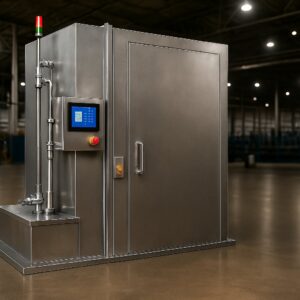
- Sanitary Cabinet Washers: Batch-style sanitizing systems designed for totes, trays, containers, removable equipment, product-contact components, and reusable packaging.
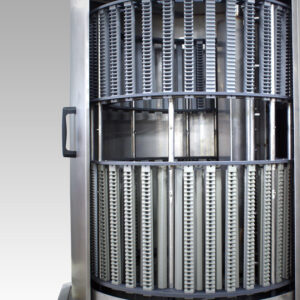
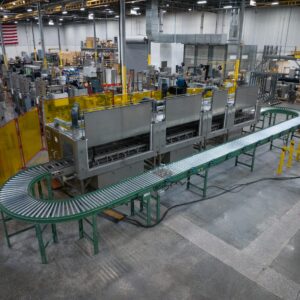
- Rack Washers: High-capacity rack washers designed for bakery racks, smoke racks, cooling racks, process racks, and production carts requiring repeatable sanitization.
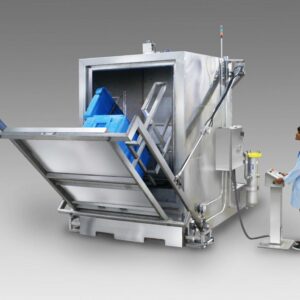
- Vat & Buggy Washers: Purpose-built systems for cleaning and sanitizing vats, meat buggies, ingredient carts, and material-handling containers used throughout food processing operations.
- Cart Washers: Automated cart washer systems designed for utility carts, transport carts, process carts, and other mobile production equipment.
Common Applications
Better Engineering sanitizing systems are commonly used to clean and sanitize production racks, bakery racks, smoke racks, utility carts, process carts, vats and buggies, totes and containers, trays and pans, product-contact equipment, processing tools, removable machine components, and material handling equipment.
Why Choose an Automated Sanitizing System?
Automated sanitizing systems help facilities improve cleaning consistency, reduce manual labor, and support safer, more controlled sanitation processes. For operations cleaning large racks, carts, totes, vats, containers, or production equipment, automation provides a repeatable alternative to labor-intensive manual washdown.
| Item | Details |
| Improved Worker Safety | Automating the cleaning process reduces the physical demands of manually washing large, heavy, or awkward equipment while helping limit operator exposure to soils, hot water, and cleaning chemicals. |
| Consistent Cleaning Performance | Every cycle delivers controlled wash, rinse, sanitize, and dry performance, helping reduce the variability associated with manual cleaning methods. |
| Validation & Documentation Support | Critical process parameters can be monitored and recorded to support sanitation programs, quality systems, cleaning validation, and regulatory documentation requirements. |
| Increased Throughput | Automated sanitizing washers help facilities process more equipment in less time, reduce cleaning bottlenecks, and keep production assets ready for reuse. |
| Reduced Labor Requirements | By replacing time-consuming manual cleaning, sanitizing systems help improve efficiency, address workforce challenges, and allow employees to focus on higher-value tasks. |
| Sustainability Benefits | Controlled wash cycles, recirculation, filtration, chemical dosing, and optimized heating can help reduce water, energy, and chemical consumption compared with less controlled manual cleaning methods. |
| Custom Engineered Solutions | Every Better Engineering sanitary washer can be configured around your equipment, sanitation standards, wash chemistry, throughput goals, facility layout, utility requirements, and documentation needs. |