
Sanitizing Vat & Buggy Washer

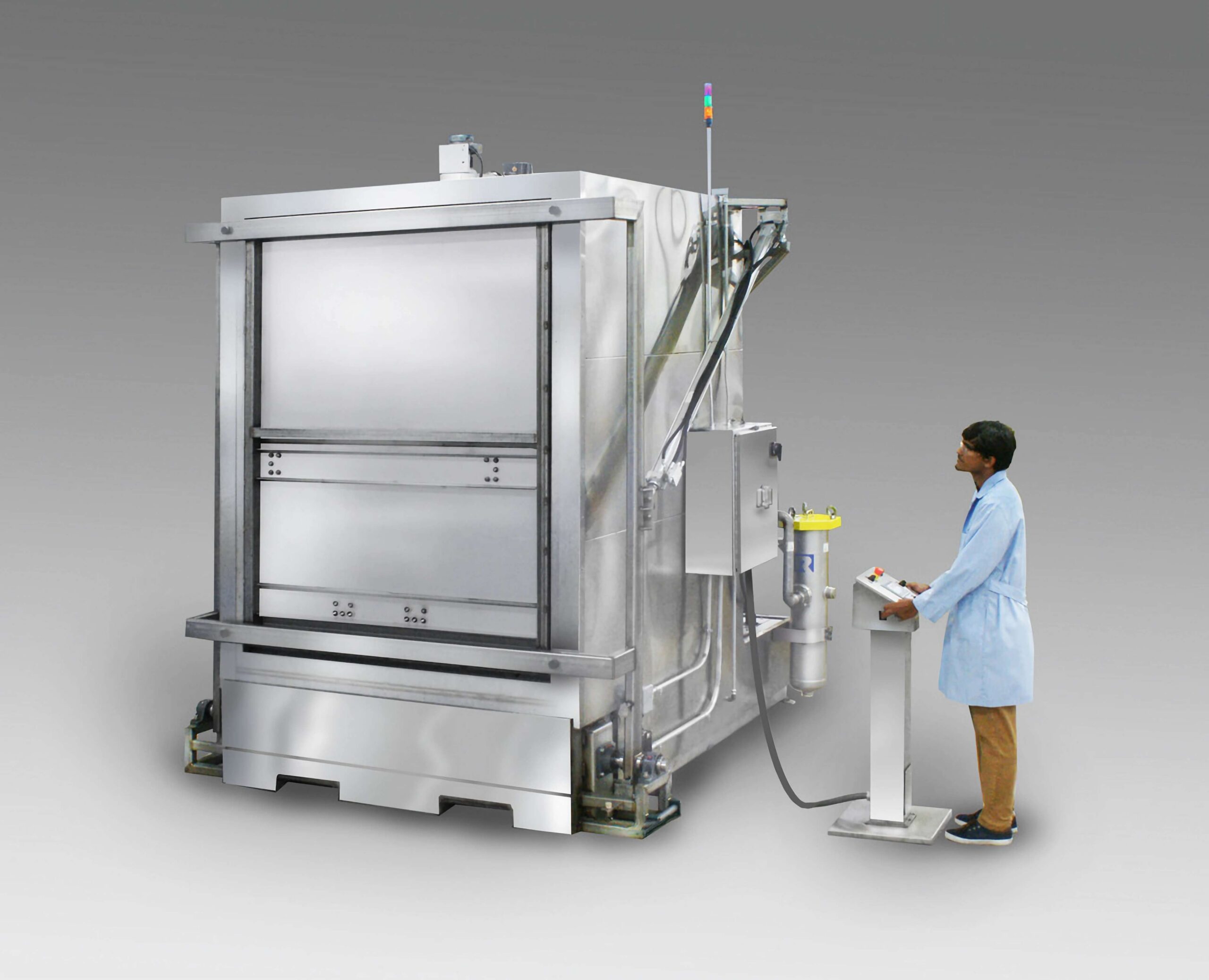
Better Engineering vat washers and buggy washers automate the cleaning and sanitizing of large containers that are often still cleaned manually in food processing, pharmaceutical, and other sanitation-critical production environments. Designed for vats, buggies, IBCs, totes, bins, and large reusable containers, these hygienic batch washers help reduce labor, water use, detergent consumption, and cleaning variability while improving repeatability and sanitation confidence.

Request a Quote online, or call (410) 931-0000 to speak with a member from our sales team.

Description

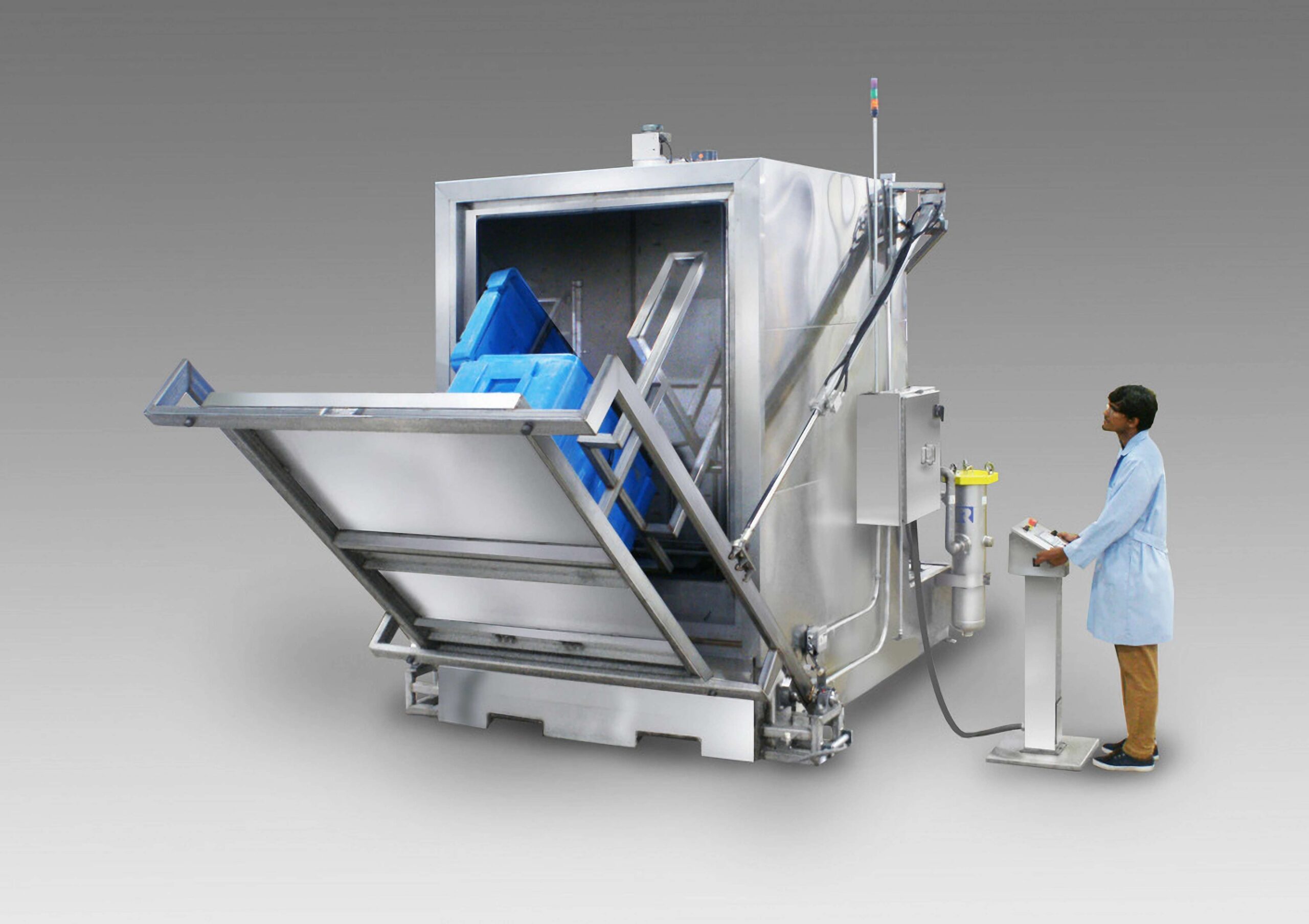
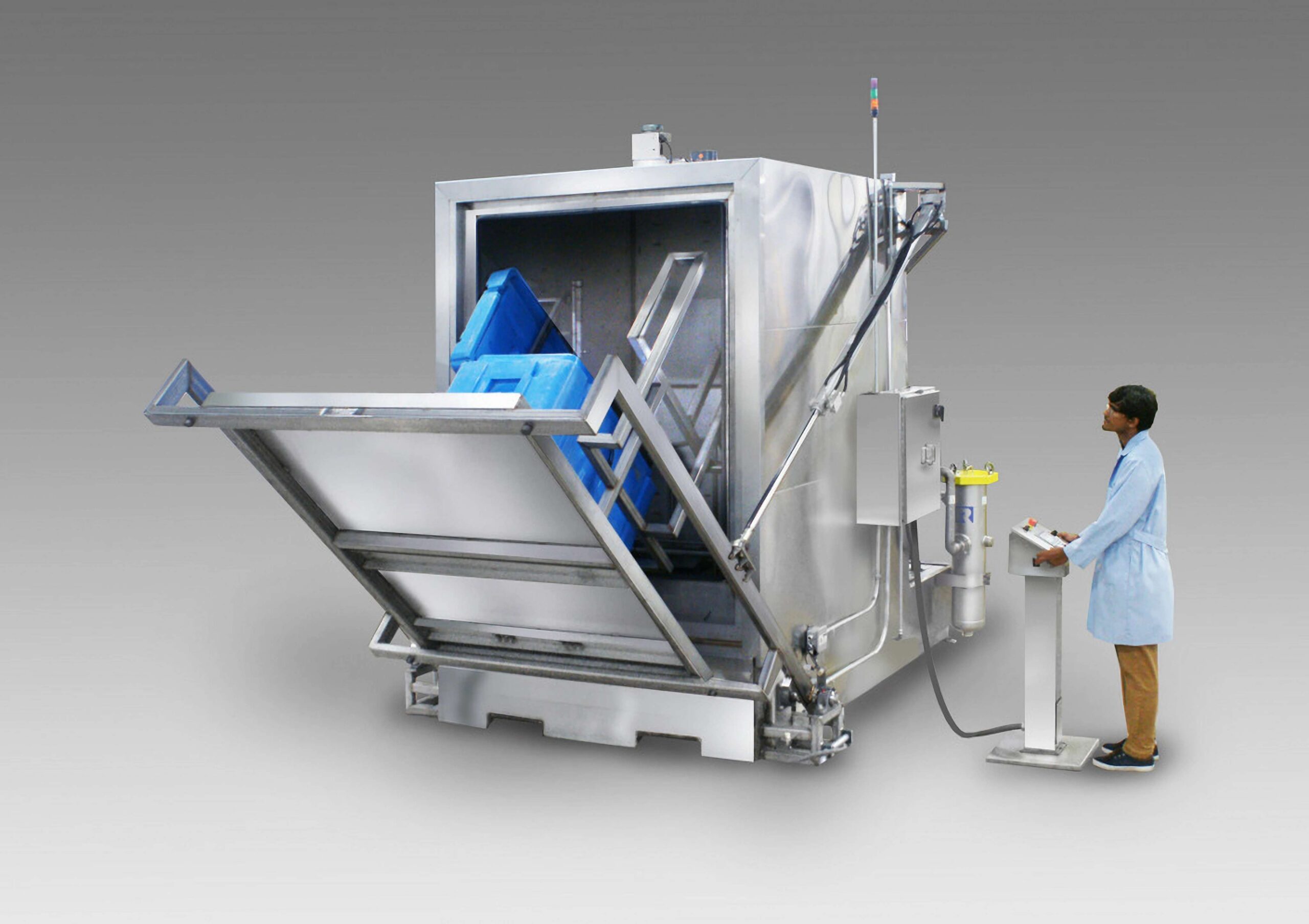
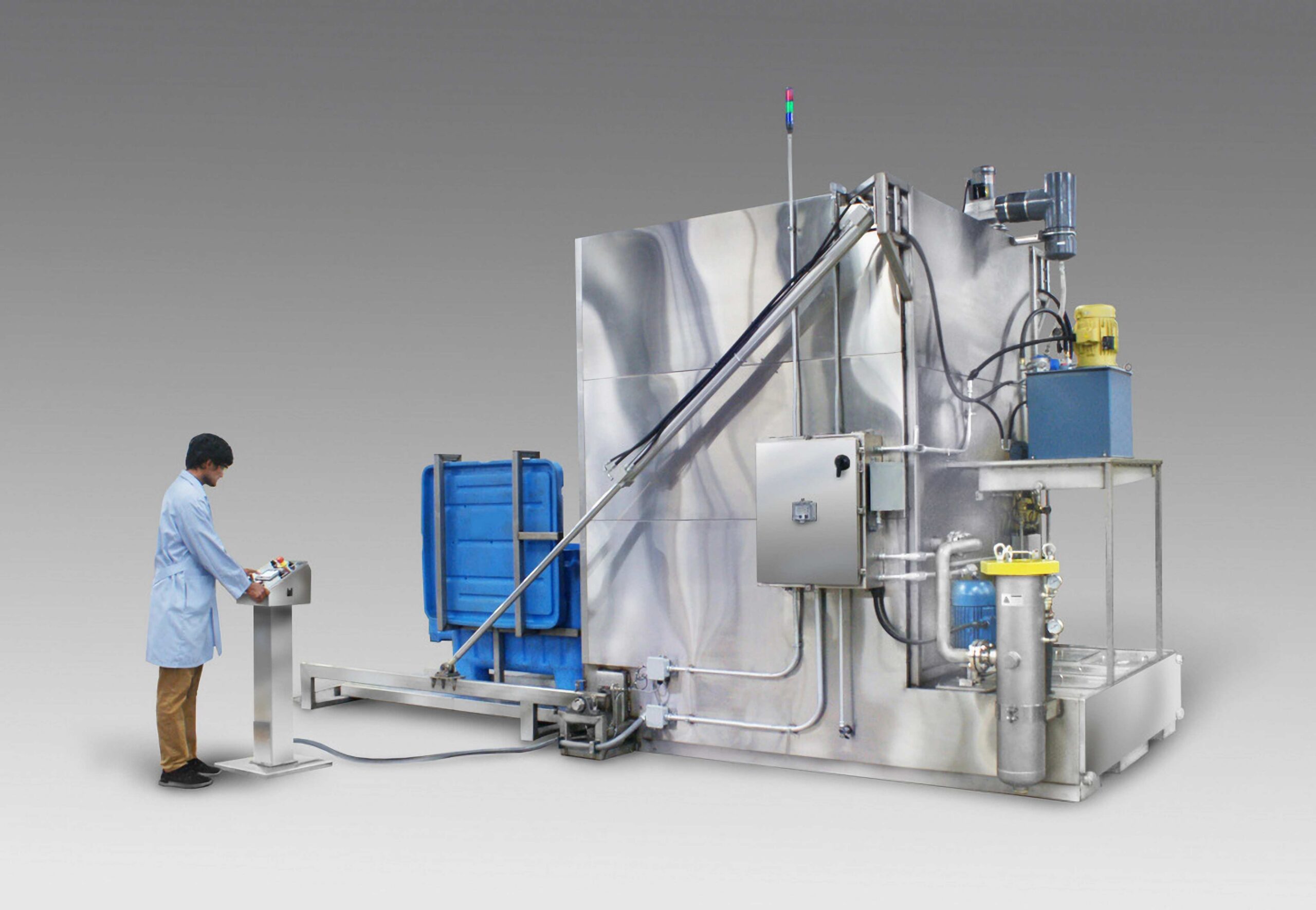
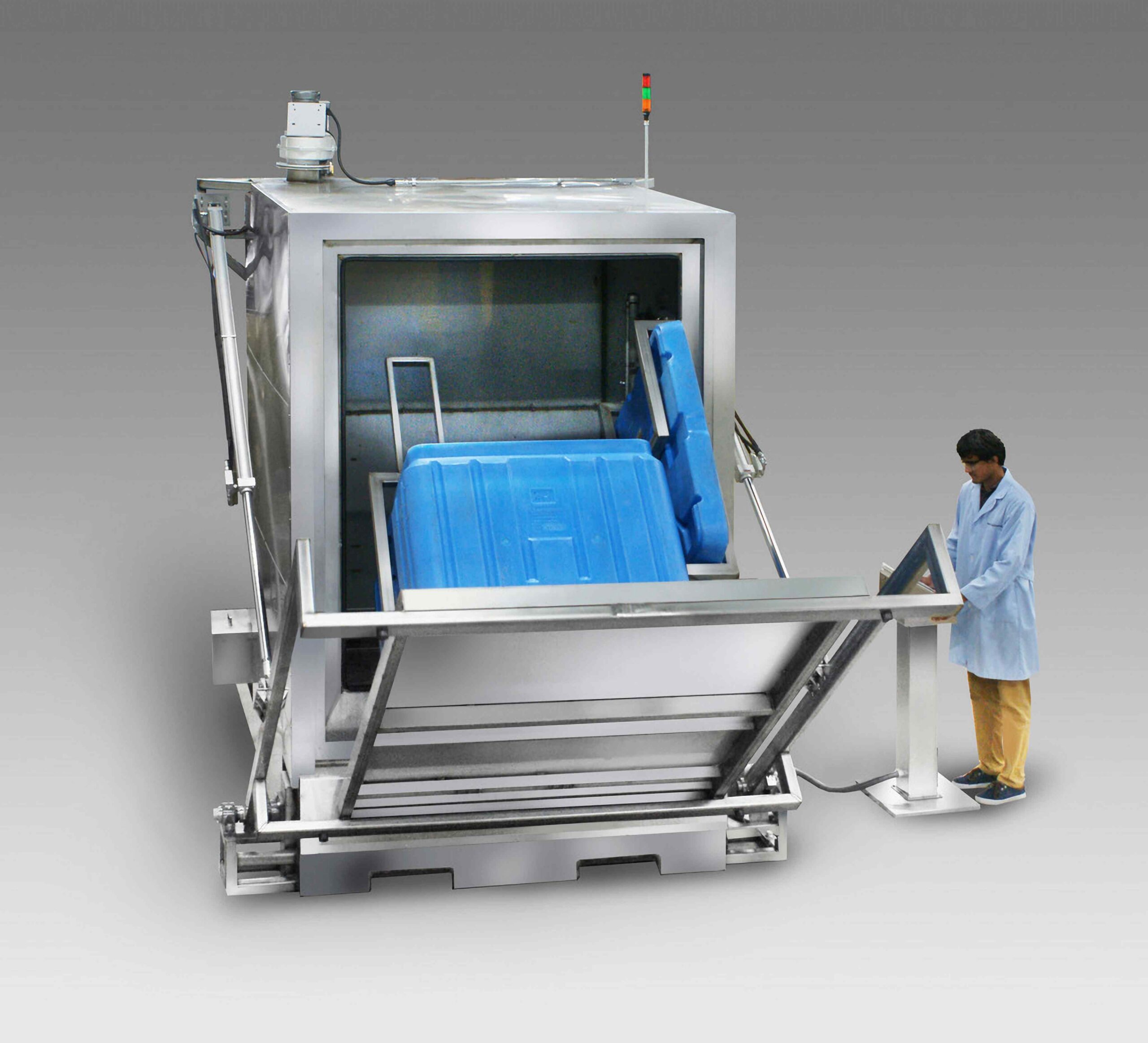
Better Engineering’s automated vat washer inverts containers 90 degrees over an E-shaped powered spray manifold, allowing high-volume spray to reach both interior and exterior product-contact surfaces. This controlled cleaning action helps remove food residue, fats, proteins, oils, powders, biological contaminants, and production soils from difficult-to-handle containers.

Depending on the application, wash and rinse solution can be recirculated for improved water, energy, and detergent efficiency, or drained after each cycle to help reduce cross-contamination risk. This flexibility is especially valuable in food, pharmaceutical, and other hygiene-critical environments where allergen control, product changeover, soil load, or validation requirements must be carefully managed. Designed around sanitary engineering principles and generally conforming to 3-A sanitary design guidelines, these systems automate the cleaning and sanitizing of vats, buggies, IBCs, totes, bins, and other large reusable containers.

For larger or higher-volume operations, vat and buggy washers can be custom-engineered around container size, payload, soil load, sanitation requirements, facility layout, and throughput goals. Better Engineering also offers dual vat washer configurations for applications that require increased capacity, faster batch processing, or higher production throughput. Systems can be configured with wash, rinse, chemical or thermal sanitizing, blow-off, drying, automated chemical dosing, PLC/HMI controls, and process monitoring to support consistent cleaning performance and documentation requirements.

Hygienic Vat Washer & Buggy Washer for Large Container Cleaning

Many food processors still rely on manual vat and buggy cleaning, which can consume significant labor, water, detergent, and operator effort throughout a shift. A sanitizing vat washer or buggy washer replaces that hand-cleaning process with a controlled, automated cycle designed to deliver consistent spray coverage, improved repeatability, and reduced cleaning variability.

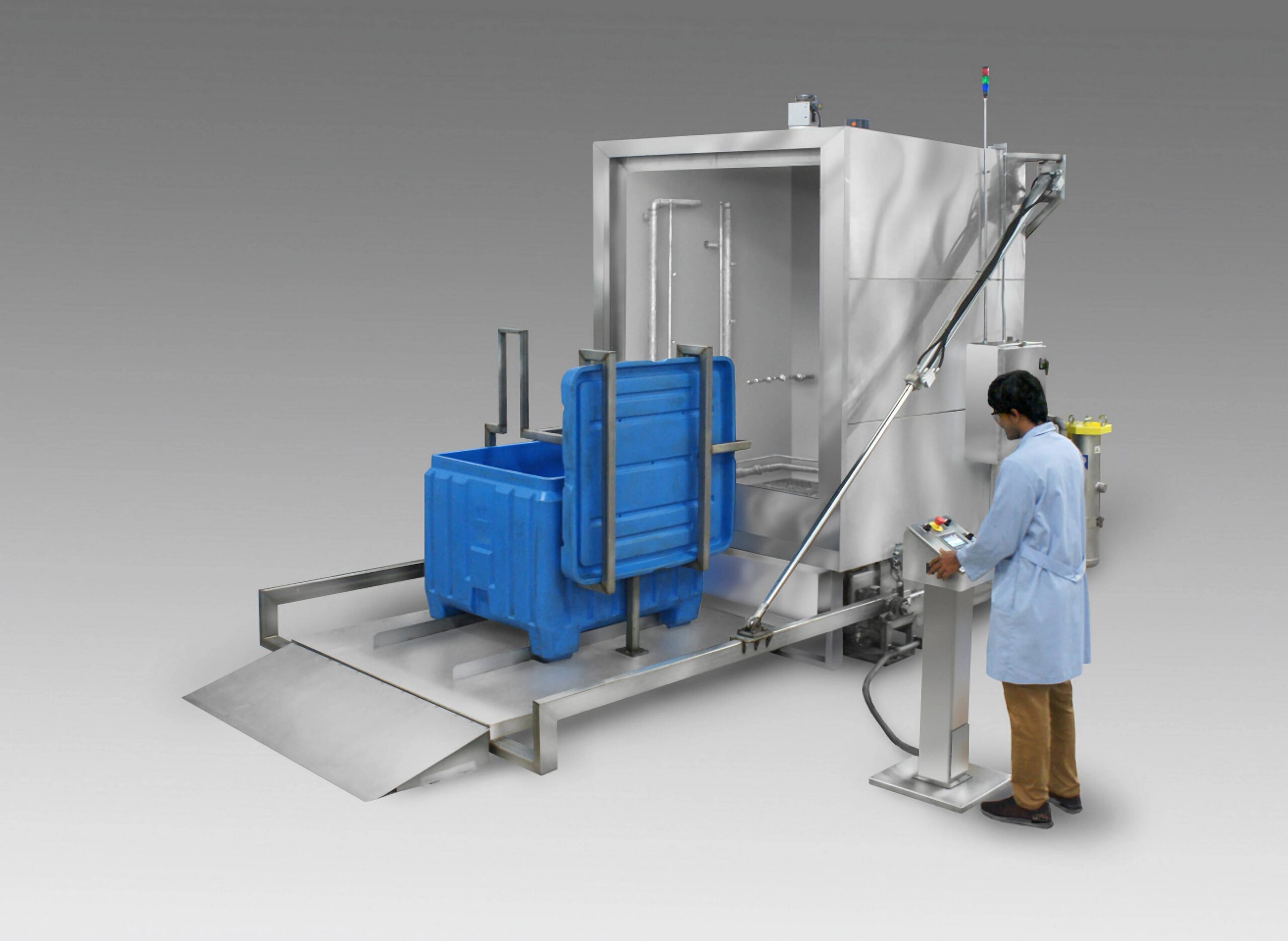
  • Container Inversion: The automated vat washer inverts containers 90 degrees over a powered spray manifold, exposing both interior and exterior surfaces to high-volume spray. This helps improve cleaning coverage on product-contact surfaces, corners, sidewalls, rims, and hard-to-reach areas.
  • Dual-Bay Configuration: For higher-volume applications, vat and buggy washers can be designed in a dual-bay configuration to clean two containers at the same time. This option helps increase throughput, reduce cleaning bottlenecks, and keep large reusable containers moving efficiently through production.
  • Minimal Site Preparation: These systems are installed above ground and use a drawbridge-style door that allows containers to be rolled directly onto the lowered door for loading. This design helps simplify installation, reduce facility modifications, and support ergonomic loading and unloading.

High-Impact Spray Coverage

Better Engineering vat and buggy washers deliver detergent wash, optional heated rinse, and optional sanitizing rinse stages through V-jet nozzles mounted on rotating spray manifolds. This spray configuration provides strong mechanical cleaning action across interior and exterior container surfaces, helping remove fats, proteins, oils, powders, residue, and other production soils.

For applications with stubborn soils, complex container geometry, or more demanding cleanliness requirements, Better Engineering can upgrade the system with linear-sweeping manifolds for high-impingement, full-coverage cleaning. This option helps improve spray contact across difficult-to-reach areas and supports more repeatable cleaning results.

The system can also include an automatic self-cleaning sequence that scours tanks and cabinet surfaces between cycles, helping reduce cross-contamination risk and maintain cleanliness inside the washer.

Target Industries & Applications

Better Engineering vat washers and buggy washers are ideal for large-container cleaning in hygienic production environments, including food processing, pharmaceutical manufacturing, bakery and prepared foods, meat, poultry, and seafood processing, dairy and ingredient handling, cosmetic and personal care manufacturing, IBC totes, vats, buggies, and bins, and large containers and product-contact vessels.

Built for Sanitary Batch Washing

Better Engineering vat and buggy washers are hygienic by design, with a sloped cabinet floor that drains into a working tank protected by chip screens. Standard cycles can be configured for non-recirculated operation, discharging solution after each cycle to help reduce cross-contamination risk and support cleaning efficacy.

System Specifications & Wash Stages

Better Engineering vat and buggy washers can be configured with the wash, rinse, sanitizing, drying, construction, and control features required for your sanitation process. Each system is engineered around your container size, payload, soil load, facility utilities, throughput goals, and validation requirements.

  • Dual-Bay Bin Washer: For higher-volume applications, Better Engineering can configure dual-bay systems to wash two bins or containers simultaneously. This helps increase throughput, reduce cleaning bottlenecks, and keep reusable containers moving efficiently through production.
  • Wash Stage: High-volume detergent spray removes food residue, product buildup, oils, debris, fats, proteins, powders, and processing soils from interior and exterior container surfaces.
  • Heated Rinse / Sanitizing Stage: Optional heated rinse and sanitizing rinse stages support food, pharmaceutical, and clean production requirements. Systems can be configured for chemical sanitization, thermal sanitization, or process-specific rinse parameters.
  • Spray Mechanism Options: Standard rotating manifolds use V-jet nozzles for consistent spray coverage. For stubborn soils, complex container geometry, or hard-to-reach surfaces, optional linear-sweeping manifolds provide deeper, high-impingement cleaning.
  • Drying Stage: Optional flash-dry or heated forced-air drying stages help remove residual moisture and prepare vats, buggies, bins, and containers for reuse, storage, or return to production.

Sanitary Construction & Controls

Better Engineering vat and buggy washers are built for demanding sanitary production environments with hygienic construction, accessible design, and intelligent controls that support repeatable operation.

Additional information

Standard Sanitary Features

– Stainless steel construction
– Insulated cabinet with stainless steel cladding
– High-volume spray pump
– Continuous internal TIG welds
– Rounded internal corners where possible
– Sloped cabinet floor
– Working tank with filter screens
– Self-cleaning working tank
– Powered vat lifting mechanism
– Rotating spray mechanism
– Water level controls

Sanitary Construction & Controls: Standard Features

– 304 stainless steel or better wetted surfaces
– Stainless steel cladding
– Insulated cabinet construction
– Full continuous TIG welds
– Rounded internal corners where possible
– Reduced-crevice design
– Steam exhaust
– Water level controls
– Automatic water fill
– PLC and HMI controls
– Design principles that support 3-A sanitary guidelines

Available Options

Optional features can be added to improve cleaning performance, sanitation control, drying, operator access, automation, and documentation.

– Heated fresh rinse stage
– Heated sanitizing stage
– Ambient fresh rinse
– Knock down stage 
– Chemical sanitization
– Thermal sanitization
– Heated forced-air drying
– Particulate filtration
– Sanitary spray pump
– Machine guarding
– Steam exhaust
– Hydraulic powered door for payloads of 300 lbs. or more
– End-of-cycle beacon lights
– Pedestal control station
– Allen-Bradley CompactLogix PLC
– Data acquisition system
– Self-cleaning working tank
– NEMA 4X central control station

Industry

Food and Beverage, HACCP-Controlled Operations, Meat and Poultry, Produce Handling Facilities, Reusable Packaging Operations, Sanitary Production Environments, Seafood Processing

Description

Better Engineering’s automated vat washer inverts containers 90 degrees over an E-shaped powered spray manifold, allowing high-volume spray to reach both interior and exterior product-contact surfaces. This controlled cleaning action helps remove food residue, fats, proteins, oils, powders, biological contaminants, and production soils from difficult-to-handle containers.

Depending on the application, wash and rinse solution can be recirculated for improved water, energy, and detergent efficiency, or drained after each cycle to help reduce cross-contamination risk. This flexibility is especially valuable in food, pharmaceutical, and other hygiene-critical environments where allergen control, product changeover, soil load, or validation requirements must be carefully managed. Designed around sanitary engineering principles and generally conforming to 3-A sanitary design guidelines, these systems automate the cleaning and sanitizing of vats, buggies, IBCs, totes, bins, and other large reusable containers.

For larger or higher-volume operations, vat and buggy washers can be custom-engineered around container size, payload, soil load, sanitation requirements, facility layout, and throughput goals. Better Engineering also offers dual vat washer configurations for applications that require increased capacity, faster batch processing, or higher production throughput. Systems can be configured with wash, rinse, chemical or thermal sanitizing, blow-off, drying, automated chemical dosing, PLC/HMI controls, and process monitoring to support consistent cleaning performance and documentation requirements.

Hygienic Vat Washer & Buggy Washer for Large Container Cleaning

Many food processors still rely on manual vat and buggy cleaning, which can consume significant labor, water, detergent, and operator effort throughout a shift. A sanitizing vat washer or buggy washer replaces that hand-cleaning process with a controlled, automated cycle designed to deliver consistent spray coverage, improved repeatability, and reduced cleaning variability.

  • Container Inversion: The automated vat washer inverts containers 90 degrees over a powered spray manifold, exposing both interior and exterior surfaces to high-volume spray. This helps improve cleaning coverage on product-contact surfaces, corners, sidewalls, rims, and hard-to-reach areas.
  • Dual-Bay Configuration: For higher-volume applications, vat and buggy washers can be designed in a dual-bay configuration to clean two containers at the same time. This option helps increase throughput, reduce cleaning bottlenecks, and keep large reusable containers moving efficiently through production.
  • Minimal Site Preparation: These systems are installed above ground and use a drawbridge-style door that allows containers to be rolled directly onto the lowered door for loading. This design helps simplify installation, reduce facility modifications, and support ergonomic loading and unloading.

High-Impact Spray Coverage

Better Engineering vat and buggy washers deliver detergent wash, optional heated rinse, and optional sanitizing rinse stages through V-jet nozzles mounted on rotating spray manifolds. This spray configuration provides strong mechanical cleaning action across interior and exterior container surfaces, helping remove fats, proteins, oils, powders, residue, and other production soils.

For applications with stubborn soils, complex container geometry, or more demanding cleanliness requirements, Better Engineering can upgrade the system with linear-sweeping manifolds for high-impingement, full-coverage cleaning. This option helps improve spray contact across difficult-to-reach areas and supports more repeatable cleaning results.

The system can also include an automatic self-cleaning sequence that scours tanks and cabinet surfaces between cycles, helping reduce cross-contamination risk and maintain cleanliness inside the washer.

Target Industries & Applications

Better Engineering vat washers and buggy washers are ideal for large-container cleaning in hygienic production environments, including food processing, pharmaceutical manufacturing, bakery and prepared foods, meat, poultry, and seafood processing, dairy and ingredient handling, cosmetic and personal care manufacturing, IBC totes, vats, buggies, and bins, and large containers and product-contact vessels.

Built for Sanitary Batch Washing

Better Engineering vat and buggy washers are hygienic by design, with a sloped cabinet floor that drains into a working tank protected by chip screens. Standard cycles can be configured for non-recirculated operation, discharging solution after each cycle to help reduce cross-contamination risk and support cleaning efficacy.

System Specifications & Wash Stages

Better Engineering vat and buggy washers can be configured with the wash, rinse, sanitizing, drying, construction, and control features required for your sanitation process. Each system is engineered around your container size, payload, soil load, facility utilities, throughput goals, and validation requirements.

  • Dual-Bay Bin Washer: For higher-volume applications, Better Engineering can configure dual-bay systems to wash two bins or containers simultaneously. This helps increase throughput, reduce cleaning bottlenecks, and keep reusable containers moving efficiently through production.
  • Wash Stage: High-volume detergent spray removes food residue, product buildup, oils, debris, fats, proteins, powders, and processing soils from interior and exterior container surfaces.
  • Heated Rinse / Sanitizing Stage: Optional heated rinse and sanitizing rinse stages support food, pharmaceutical, and clean production requirements. Systems can be configured for chemical sanitization, thermal sanitization, or process-specific rinse parameters.
  • Spray Mechanism Options: Standard rotating manifolds use V-jet nozzles for consistent spray coverage. For stubborn soils, complex container geometry, or hard-to-reach surfaces, optional linear-sweeping manifolds provide deeper, high-impingement cleaning.
  • Drying Stage: Optional flash-dry or heated forced-air drying stages help remove residual moisture and prepare vats, buggies, bins, and containers for reuse, storage, or return to production.

Sanitary Construction & Controls

Better Engineering vat and buggy washers are built for demanding sanitary production environments with hygienic construction, accessible design, and intelligent controls that support repeatable operation.

Additional information

Standard Sanitary Features

– Stainless steel construction
– Insulated cabinet with stainless steel cladding
– High-volume spray pump
– Continuous internal TIG welds
– Rounded internal corners where possible
– Sloped cabinet floor
– Working tank with filter screens
– Self-cleaning working tank
– Powered vat lifting mechanism
– Rotating spray mechanism
– Water level controls

Sanitary Construction & Controls: Standard Features

– 304 stainless steel or better wetted surfaces
– Stainless steel cladding
– Insulated cabinet construction
– Full continuous TIG welds
– Rounded internal corners where possible
– Reduced-crevice design
– Steam exhaust
– Water level controls
– Automatic water fill
– PLC and HMI controls
– Design principles that support 3-A sanitary guidelines

Available Options

Optional features can be added to improve cleaning performance, sanitation control, drying, operator access, automation, and documentation.

– Heated fresh rinse stage
– Heated sanitizing stage
– Ambient fresh rinse
– Knock down stage 
– Chemical sanitization
– Thermal sanitization
– Heated forced-air drying
– Particulate filtration
– Sanitary spray pump
– Machine guarding
– Steam exhaust
– Hydraulic powered door for payloads of 300 lbs. or more
– End-of-cycle beacon lights
– Pedestal control station
– Allen-Bradley CompactLogix PLC
– Data acquisition system
– Self-cleaning working tank
– NEMA 4X central control station

Industry

Food and Beverage, HACCP-Controlled Operations, Meat and Poultry, Produce Handling Facilities, Reusable Packaging Operations, Sanitary Production Environments, Seafood Processing

Better Engineering’s automated vat washer inverts containers 90 degrees over an E-shaped powered spray manifold, allowing high-volume spray to reach both interior and exterior product-contact surfaces. This controlled cleaning action helps remove food residue, fats, proteins, oils, powders, biological contaminants, and production soils from difficult-to-handle containers.

Depending on the application, wash and rinse solution can be recirculated for improved water, energy, and detergent efficiency, or drained after each cycle to help reduce cross-contamination risk. This flexibility is especially valuable in food, pharmaceutical, and other hygiene-critical environments where allergen control, product changeover, soil load, or validation requirements must be carefully managed. Designed around sanitary engineering principles and generally conforming to 3-A sanitary design guidelines, these systems automate the cleaning and sanitizing of vats, buggies, IBCs, totes, bins, and other large reusable containers.

For larger or higher-volume operations, vat and buggy washers can be custom-engineered around container size, payload, soil load, sanitation requirements, facility layout, and throughput goals. Better Engineering also offers dual vat washer configurations for applications that require increased capacity, faster batch processing, or higher production throughput. Systems can be configured with wash, rinse, chemical or thermal sanitizing, blow-off, drying, automated chemical dosing, PLC/HMI controls, and process monitoring to support consistent cleaning performance and documentation requirements.

Hygienic Vat Washer & Buggy Washer for Large Container Cleaning

Many food processors still rely on manual vat and buggy cleaning, which can consume significant labor, water, detergent, and operator effort throughout a shift. A sanitizing vat washer or buggy washer replaces that hand-cleaning process with a controlled, automated cycle designed to deliver consistent spray coverage, improved repeatability, and reduced cleaning variability.

  • Container Inversion: The automated vat washer inverts containers 90 degrees over a powered spray manifold, exposing both interior and exterior surfaces to high-volume spray. This helps improve cleaning coverage on product-contact surfaces, corners, sidewalls, rims, and hard-to-reach areas.
  • Dual-Bay Configuration: For higher-volume applications, vat and buggy washers can be designed in a dual-bay configuration to clean two containers at the same time. This option helps increase throughput, reduce cleaning bottlenecks, and keep large reusable containers moving efficiently through production.
  • Minimal Site Preparation: These systems are installed above ground and use a drawbridge-style door that allows containers to be rolled directly onto the lowered door for loading. This design helps simplify installation, reduce facility modifications, and support ergonomic loading and unloading.

High-Impact Spray Coverage

Better Engineering vat and buggy washers deliver detergent wash, optional heated rinse, and optional sanitizing rinse stages through V-jet nozzles mounted on rotating spray manifolds. This spray configuration provides strong mechanical cleaning action across interior and exterior container surfaces, helping remove fats, proteins, oils, powders, residue, and other production soils.

For applications with stubborn soils, complex container geometry, or more demanding cleanliness requirements, Better Engineering can upgrade the system with linear-sweeping manifolds for high-impingement, full-coverage cleaning. This option helps improve spray contact across difficult-to-reach areas and supports more repeatable cleaning results.

The system can also include an automatic self-cleaning sequence that scours tanks and cabinet surfaces between cycles, helping reduce cross-contamination risk and maintain cleanliness inside the washer.

Target Industries & Applications

Better Engineering vat washers and buggy washers are ideal for large-container cleaning in hygienic production environments, including food processing, pharmaceutical manufacturing, bakery and prepared foods, meat, poultry, and seafood processing, dairy and ingredient handling, cosmetic and personal care manufacturing, IBC totes, vats, buggies, and bins, and large containers and product-contact vessels.

Built for Sanitary Batch Washing

Better Engineering vat and buggy washers are hygienic by design, with a sloped cabinet floor that drains into a working tank protected by chip screens. Standard cycles can be configured for non-recirculated operation, discharging solution after each cycle to help reduce cross-contamination risk and support cleaning efficacy.

System Specifications & Wash Stages

Better Engineering vat and buggy washers can be configured with the wash, rinse, sanitizing, drying, construction, and control features required for your sanitation process. Each system is engineered around your container size, payload, soil load, facility utilities, throughput goals, and validation requirements.

  • Dual-Bay Bin Washer: For higher-volume applications, Better Engineering can configure dual-bay systems to wash two bins or containers simultaneously. This helps increase throughput, reduce cleaning bottlenecks, and keep reusable containers moving efficiently through production.
  • Wash Stage: High-volume detergent spray removes food residue, product buildup, oils, debris, fats, proteins, powders, and processing soils from interior and exterior container surfaces.
  • Heated Rinse / Sanitizing Stage: Optional heated rinse and sanitizing rinse stages support food, pharmaceutical, and clean production requirements. Systems can be configured for chemical sanitization, thermal sanitization, or process-specific rinse parameters.
  • Spray Mechanism Options: Standard rotating manifolds use V-jet nozzles for consistent spray coverage. For stubborn soils, complex container geometry, or hard-to-reach surfaces, optional linear-sweeping manifolds provide deeper, high-impingement cleaning.
  • Drying Stage: Optional flash-dry or heated forced-air drying stages help remove residual moisture and prepare vats, buggies, bins, and containers for reuse, storage, or return to production.

Sanitary Construction & Controls

Better Engineering vat and buggy washers are built for demanding sanitary production environments with hygienic construction, accessible design, and intelligent controls that support repeatable operation.

Additional information

Standard Sanitary Features

– Stainless steel construction
– Insulated cabinet with stainless steel cladding
– High-volume spray pump
– Continuous internal TIG welds
– Rounded internal corners where possible
– Sloped cabinet floor
– Working tank with filter screens
– Self-cleaning working tank
– Powered vat lifting mechanism
– Rotating spray mechanism
– Water level controls

Sanitary Construction & Controls: Standard Features

– 304 stainless steel or better wetted surfaces
– Stainless steel cladding
– Insulated cabinet construction
– Full continuous TIG welds
– Rounded internal corners where possible
– Reduced-crevice design
– Steam exhaust
– Water level controls
– Automatic water fill
– PLC and HMI controls
– Design principles that support 3-A sanitary guidelines

Available Options

Optional features can be added to improve cleaning performance, sanitation control, drying, operator access, automation, and documentation.

– Heated fresh rinse stage
– Heated sanitizing stage
– Ambient fresh rinse
– Knock down stage 
– Chemical sanitization
– Thermal sanitization
– Heated forced-air drying
– Particulate filtration
– Sanitary spray pump
– Machine guarding
– Steam exhaust
– Hydraulic powered door for payloads of 300 lbs. or more
– End-of-cycle beacon lights
– Pedestal control station
– Allen-Bradley CompactLogix PLC
– Data acquisition system
– Self-cleaning working tank
– NEMA 4X central control station

Industry

Food and Beverage, HACCP-Controlled Operations, Meat and Poultry, Produce Handling Facilities, Reusable Packaging Operations, Sanitary Production Environments, Seafood Processing